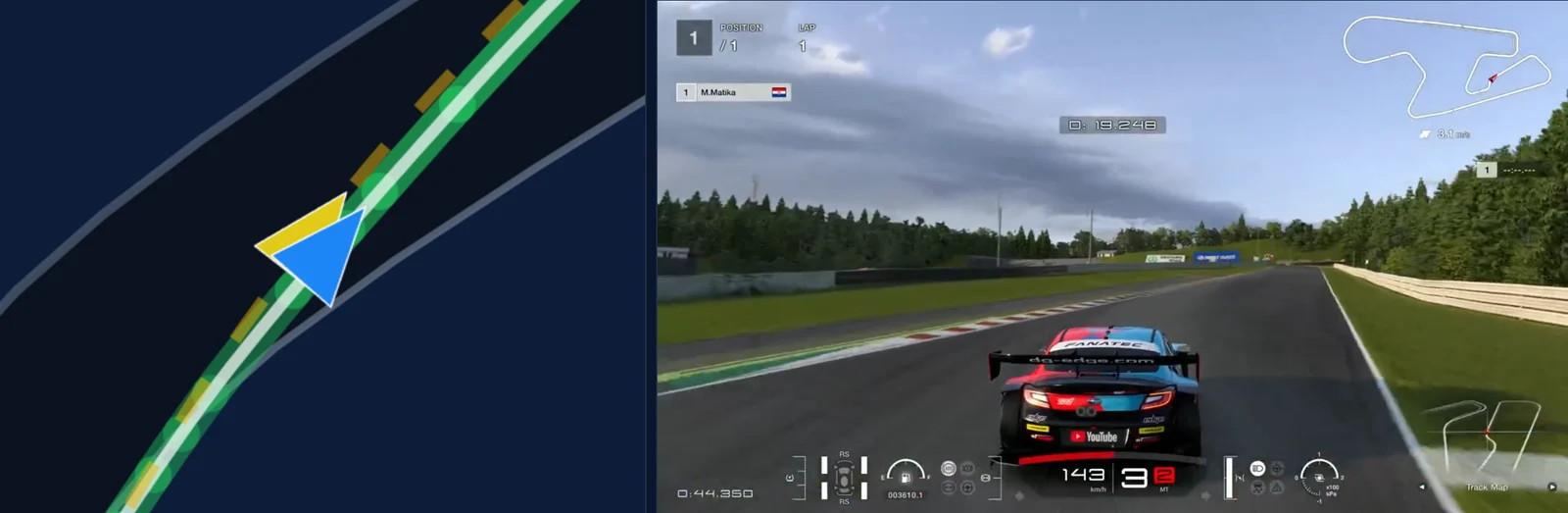
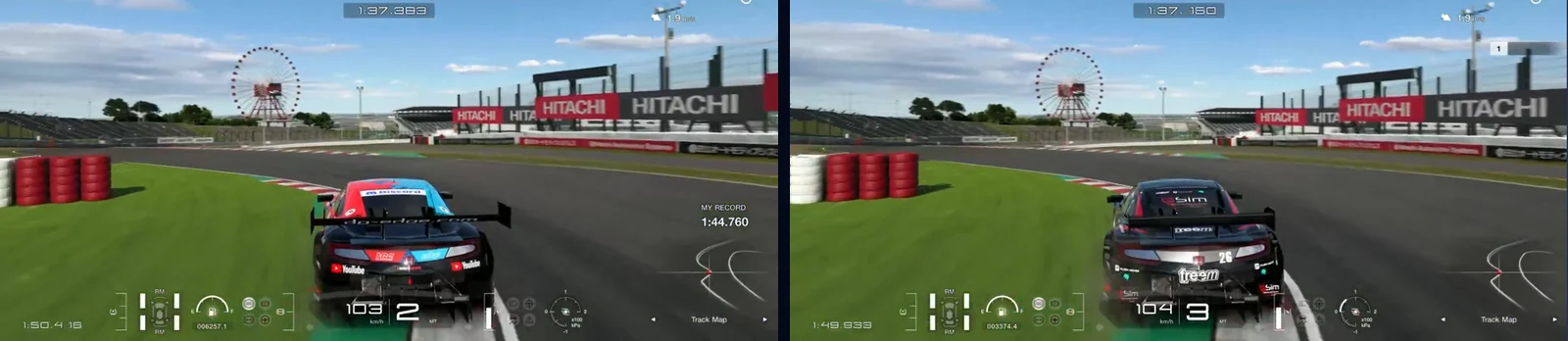
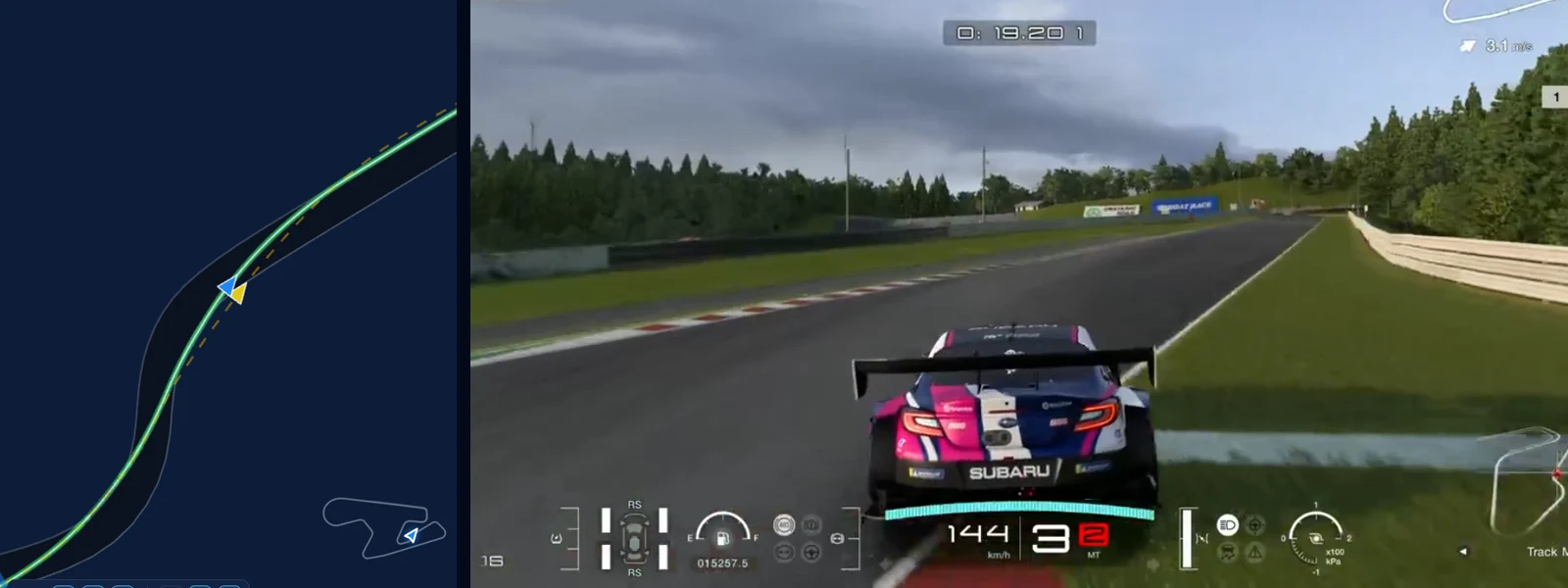
Our best lap of the Red Bull Ring in the Hyundai ELANTRA N TC for Daily Race C was a 1:33.723, and the event reference is a 1:33.403. We put both through Traces and went corner by corner to find the 0.320 s, and it is not where the brake points are. It is in how we stop the car.
This is the Gr.4 race from week 40's Daily Races, and the reference is AT__1826's 1:33.403, one of the laps the team set as references for the event, recorded from the replay with its video. If you are new to reading laps like this, our telemetry guide explains the method on a lap of SUGO.
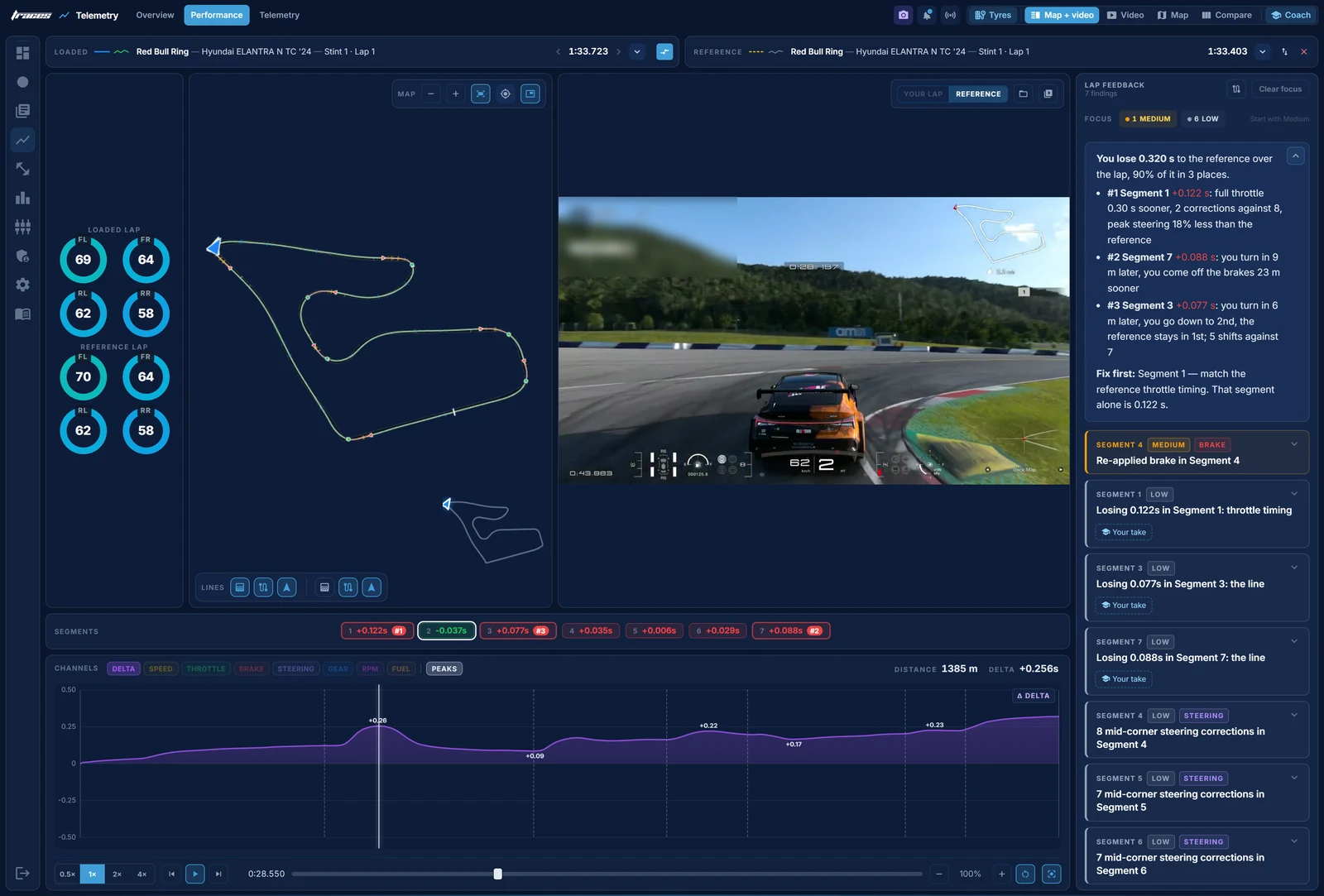
How to read the pictures
Each corner below has the same pictures. The first is the Performance page with the car at that corner: the map zoomed in, our line and the reference's dashed in yellow, and the reference's replay at the same metre. The second is the Telemetry page zoomed to the corner, with its map on the left: our traces in colour, the reference's in grey. The reference was recorded from a replay, so its brake trace in the app runs late; its brake points here are where its brake lights come on, as Traces takes them since 2.0.2.
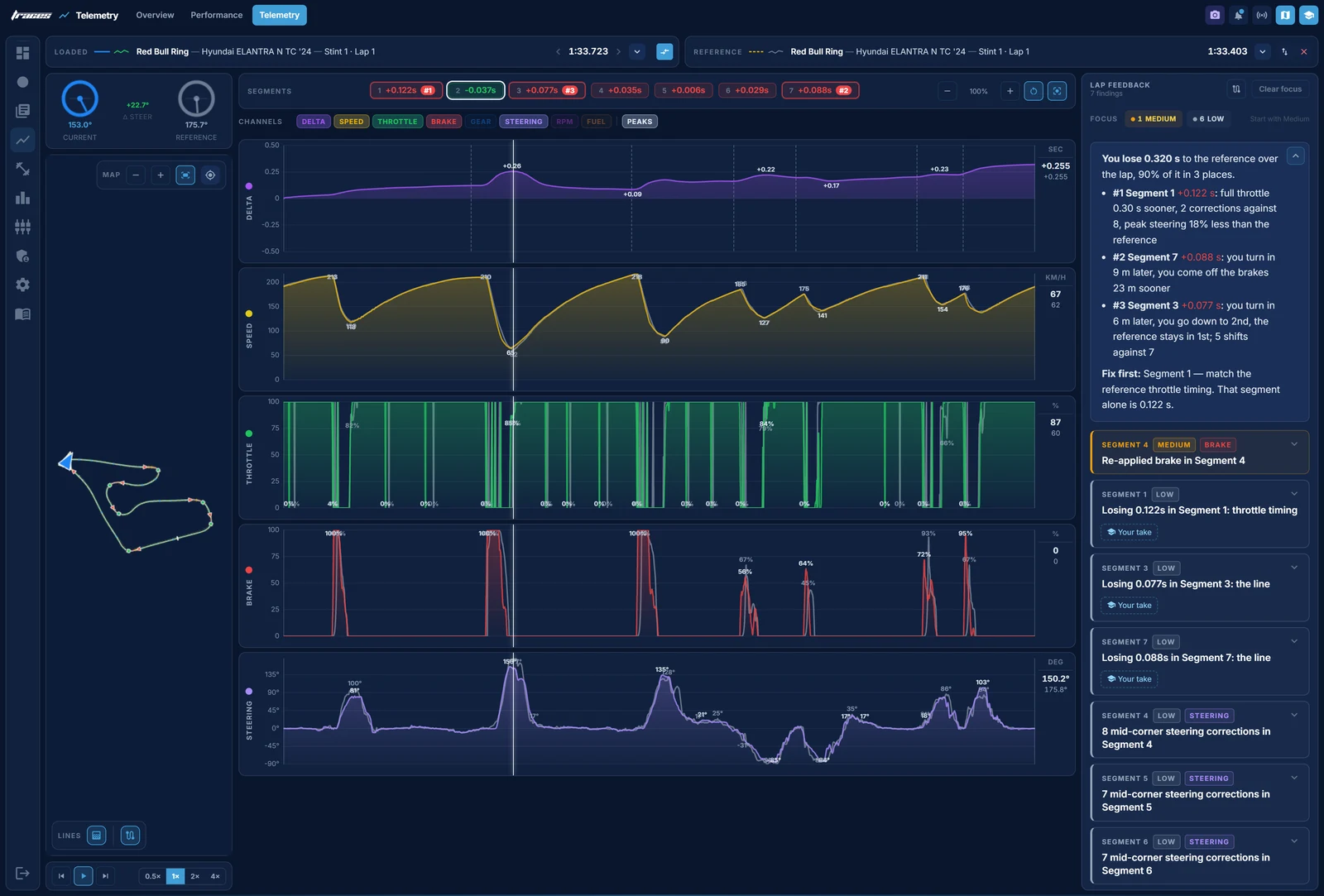
Turn 1
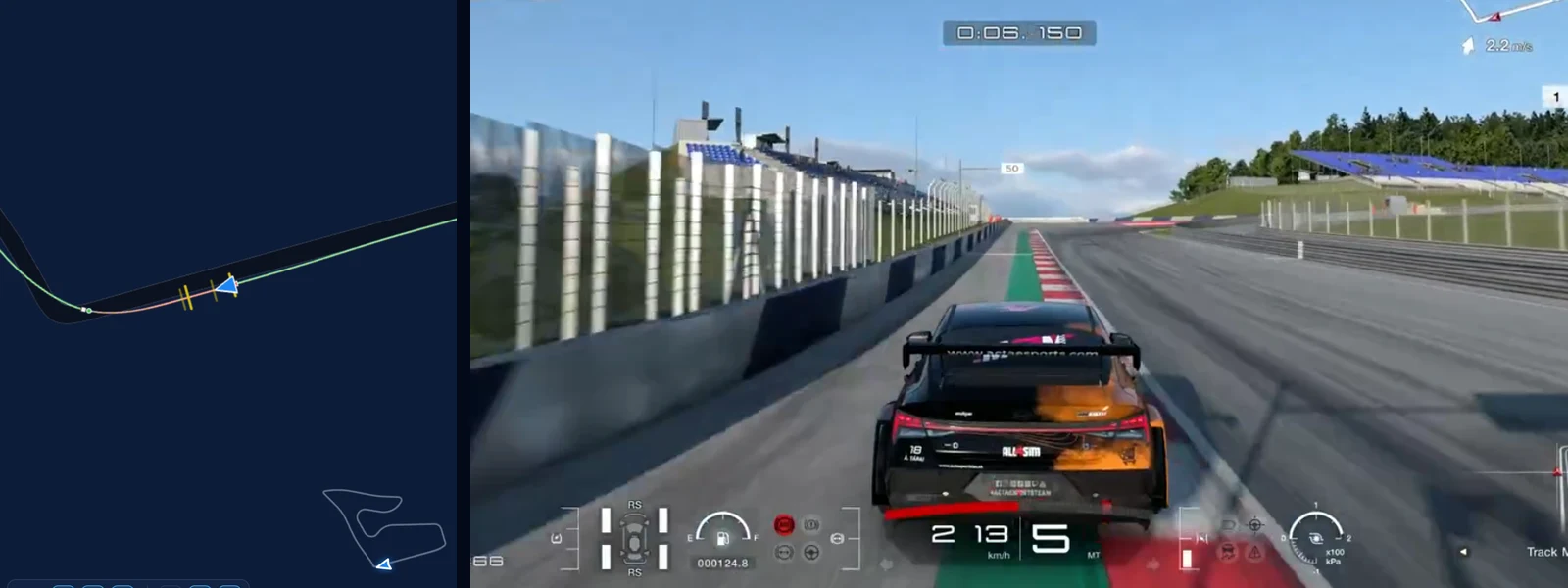
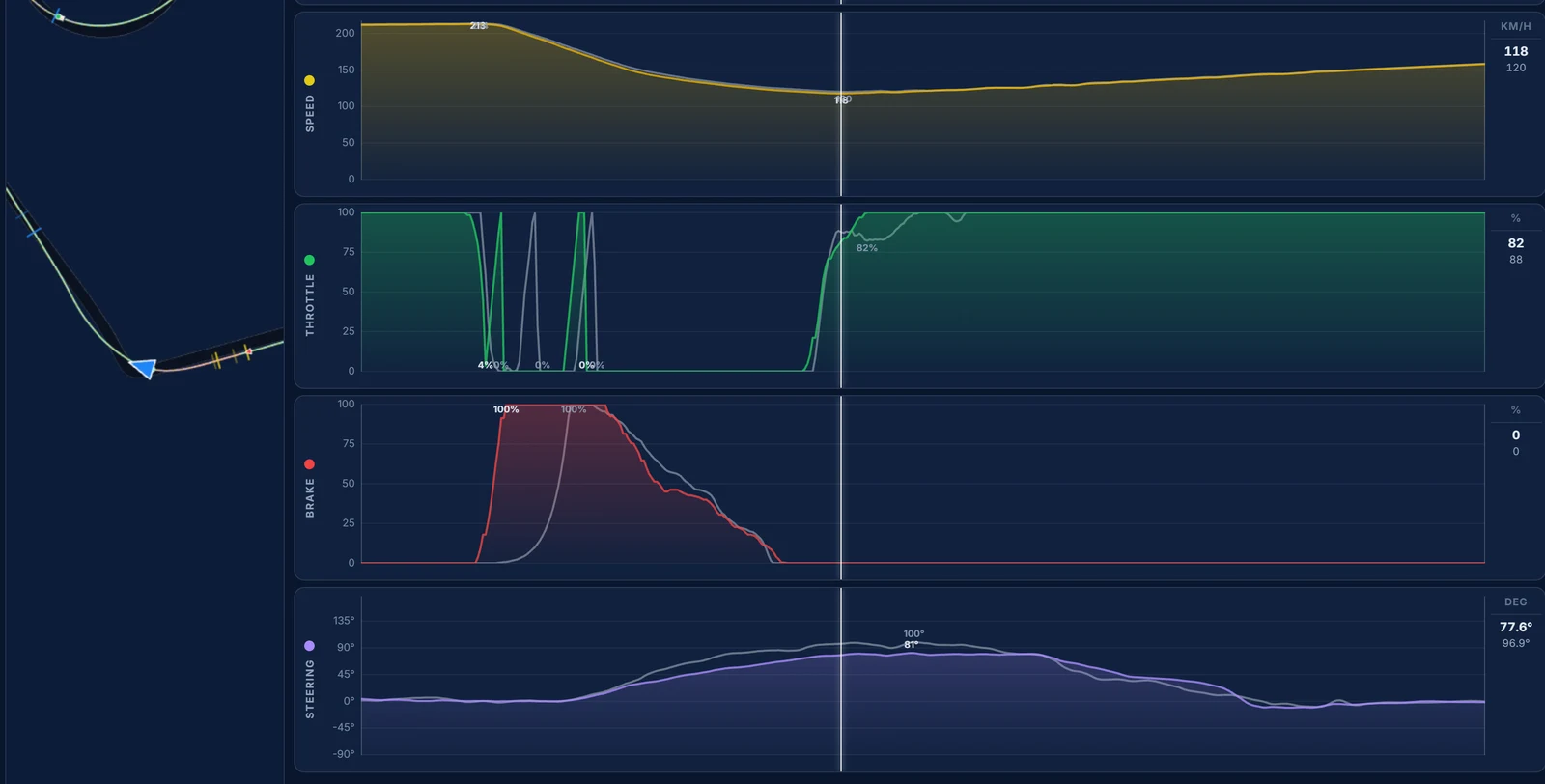
Up the hill into Turn 1 we brake at 344 m, 4 m before the reference at 348 m. Four metres sounds like nothing, but at 400 m we are 4 km/h slower than the reference, 142.9 against 146.8 km/h, and we reach the apex at 118.0 against 120.1. We come out at the same speed. Turn 1 costs 0.07 s, most of it between the brake point and the apex.
Turn 3, Remus
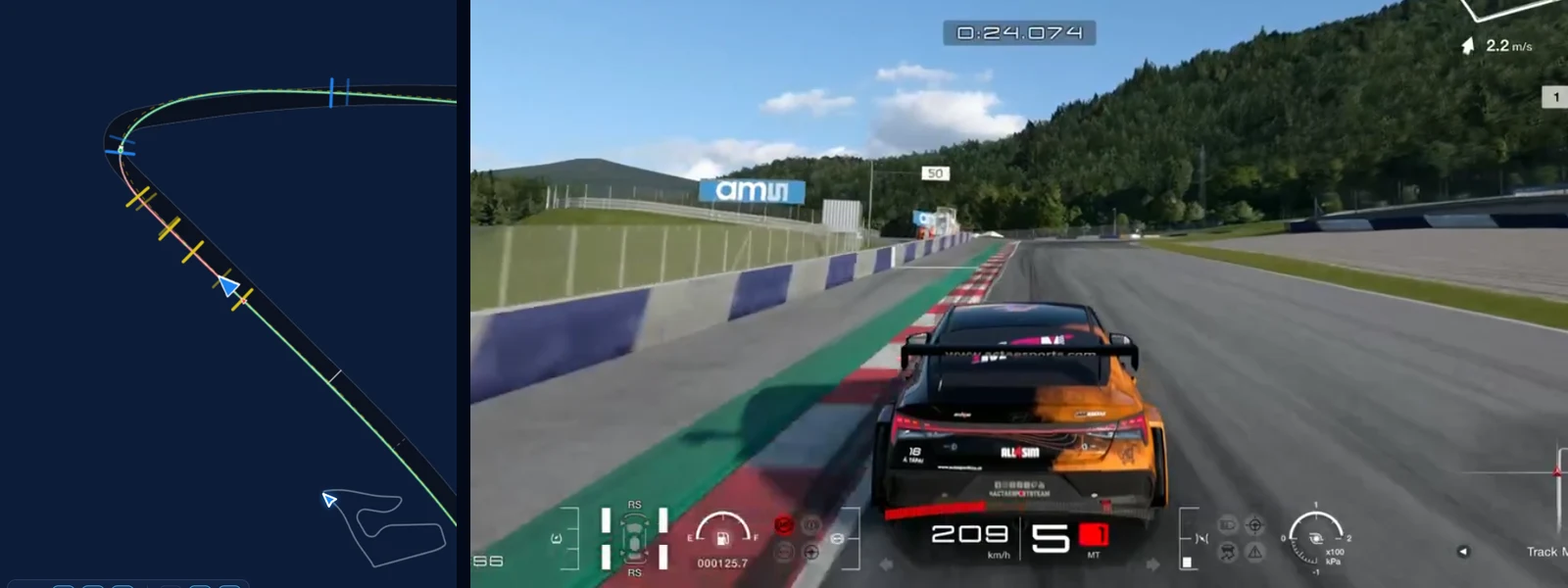
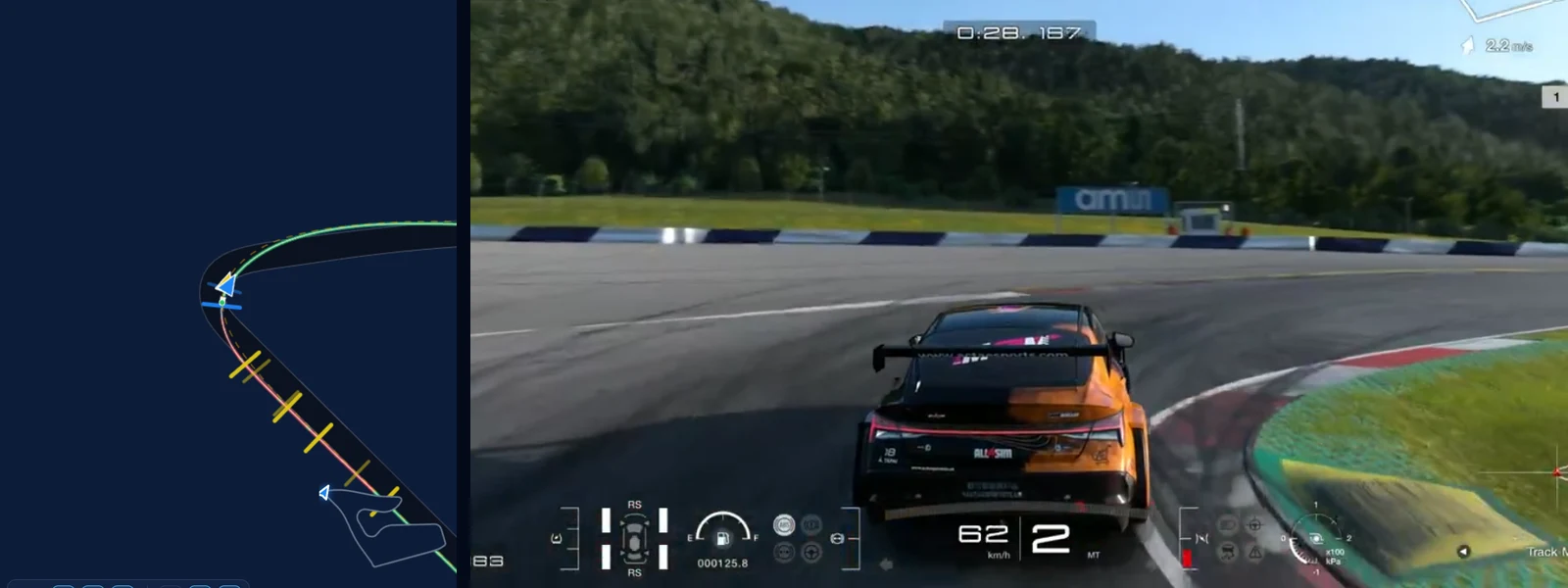
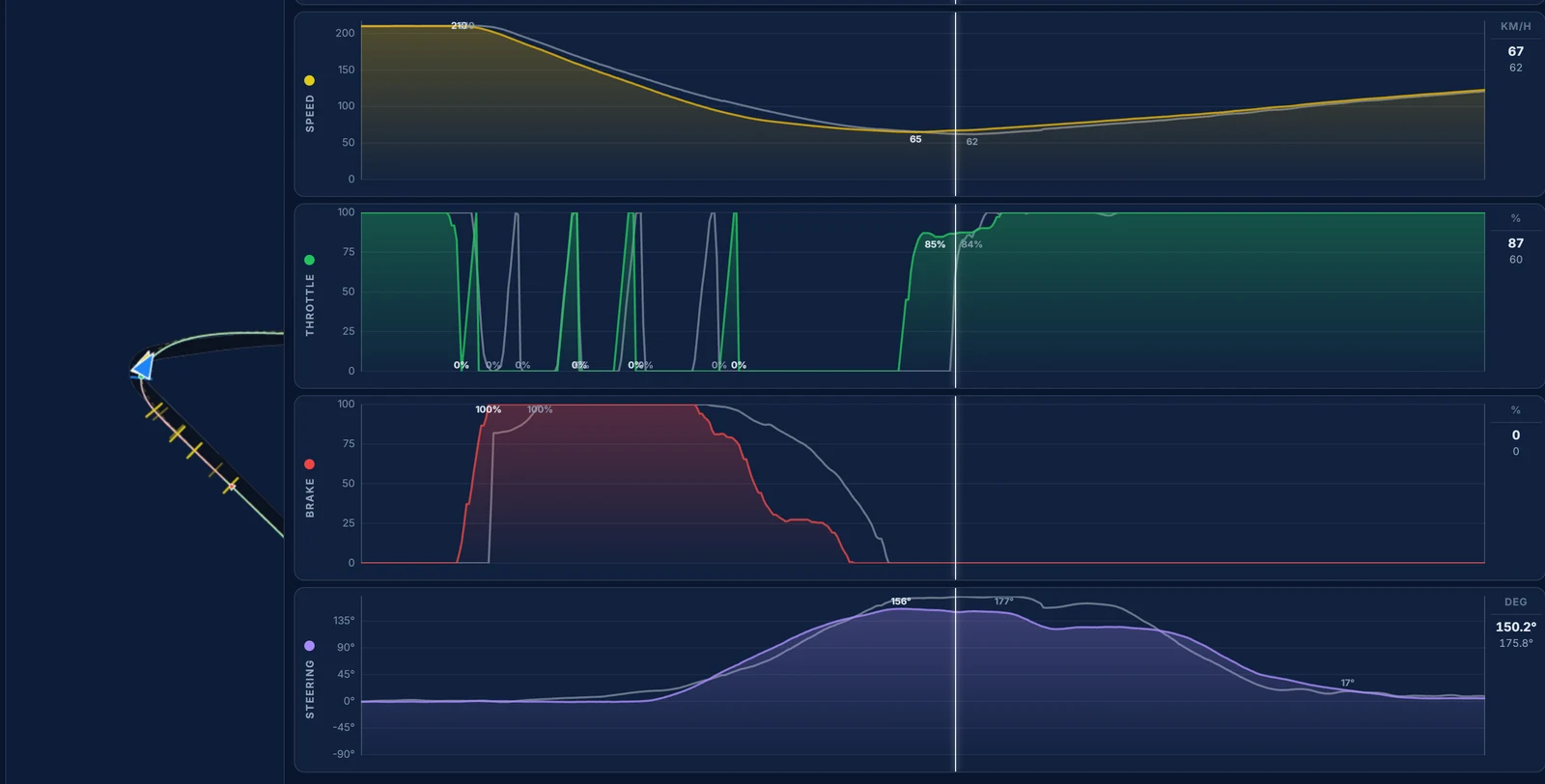
Remus is where we gain. We brake 13 m earlier than the reference, at 1,279 m against 1,292 m, which on its own would cost us. But we carry 3.1 km/h more through the hairpin, 65.0 against 61.9 km/h, on a line up to 2 m away from the reference's, and we are back on the throttle at the same place. By the end of the corner we have 0.03 s back. An early brake is not always a mistake: here it buys a faster apex.
Turn 4, Schlossgold
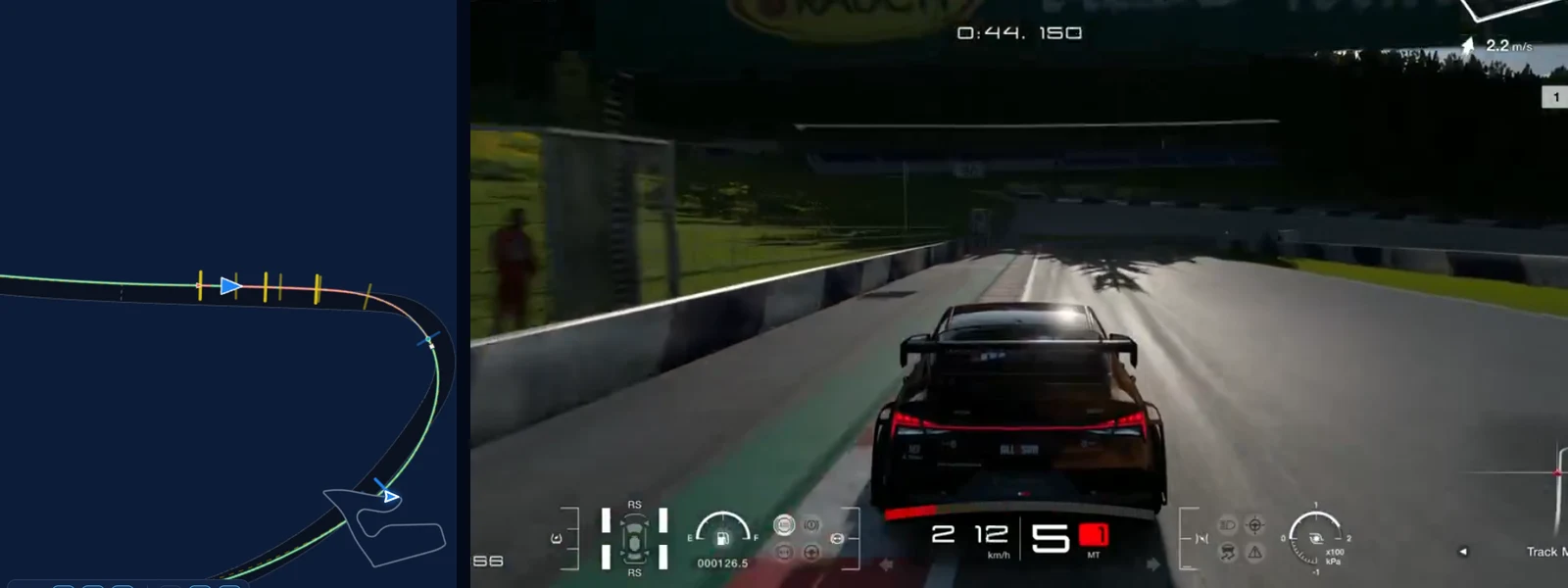
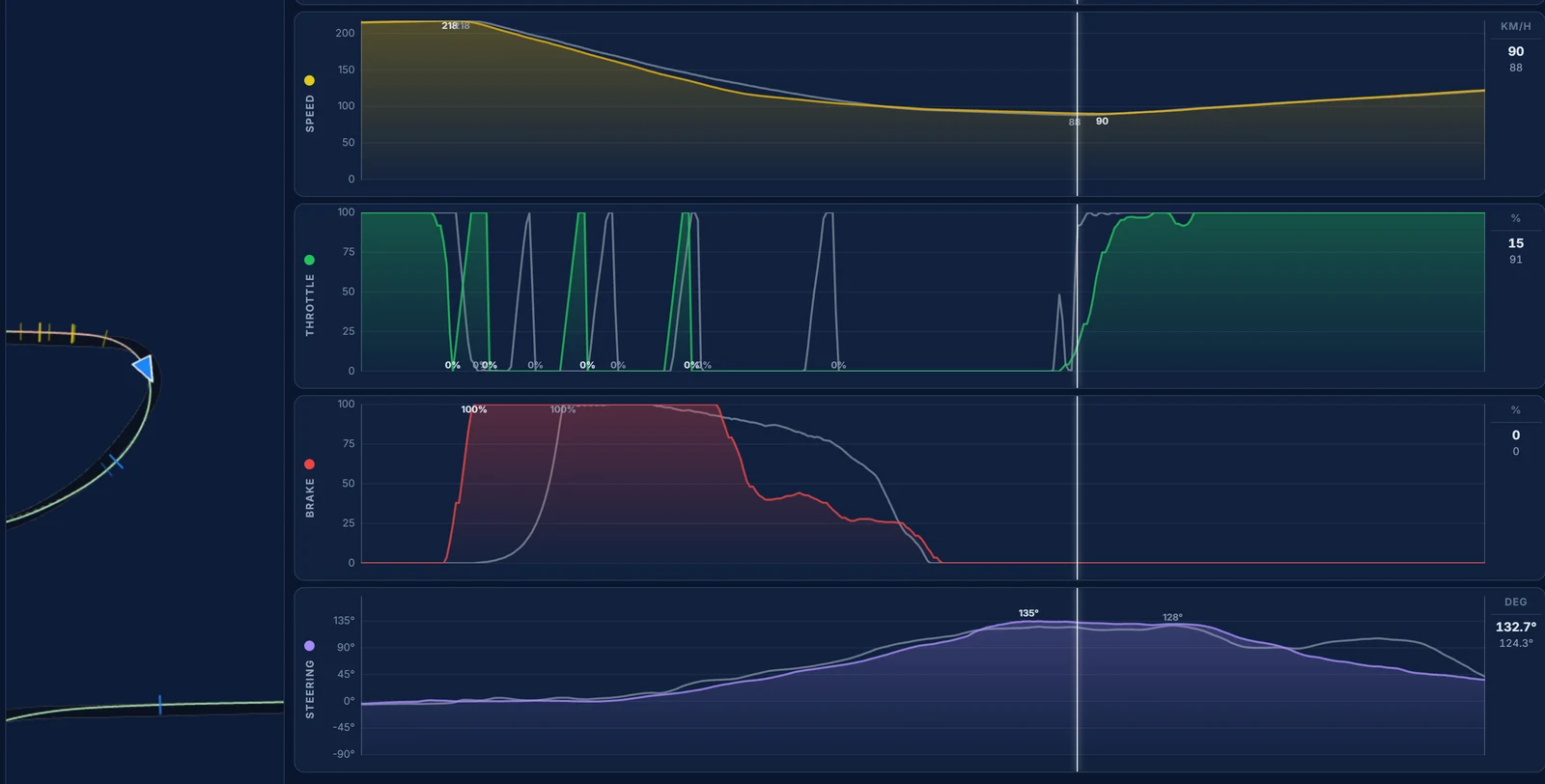
The second piece of the lap is Turn 4, downhill from 217 km/h. We brake at 2,069 m, 5 m before the reference, and 30 m into the stop we are 5 km/h slower, 187.9 against 193.3 km/h. We then trail a light brake all the way to the apex and reach it faster than the reference, 89.9 against 88.4 km/h, but the corner has already cost 0.08 s. Turn 4 is the clearest case on the lap: our biggest losses at the Red Bull Ring come in the first 30 to 50 metres of the braking zones, not from where the braking starts.
The two left-handers
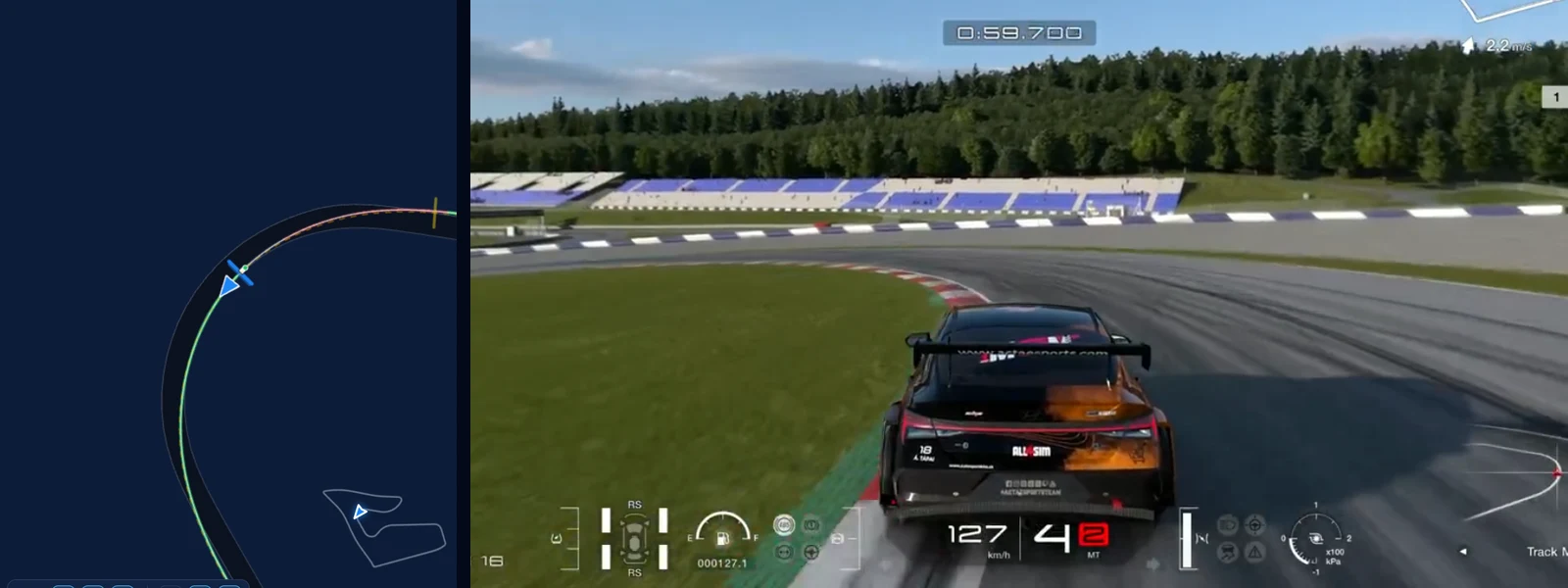
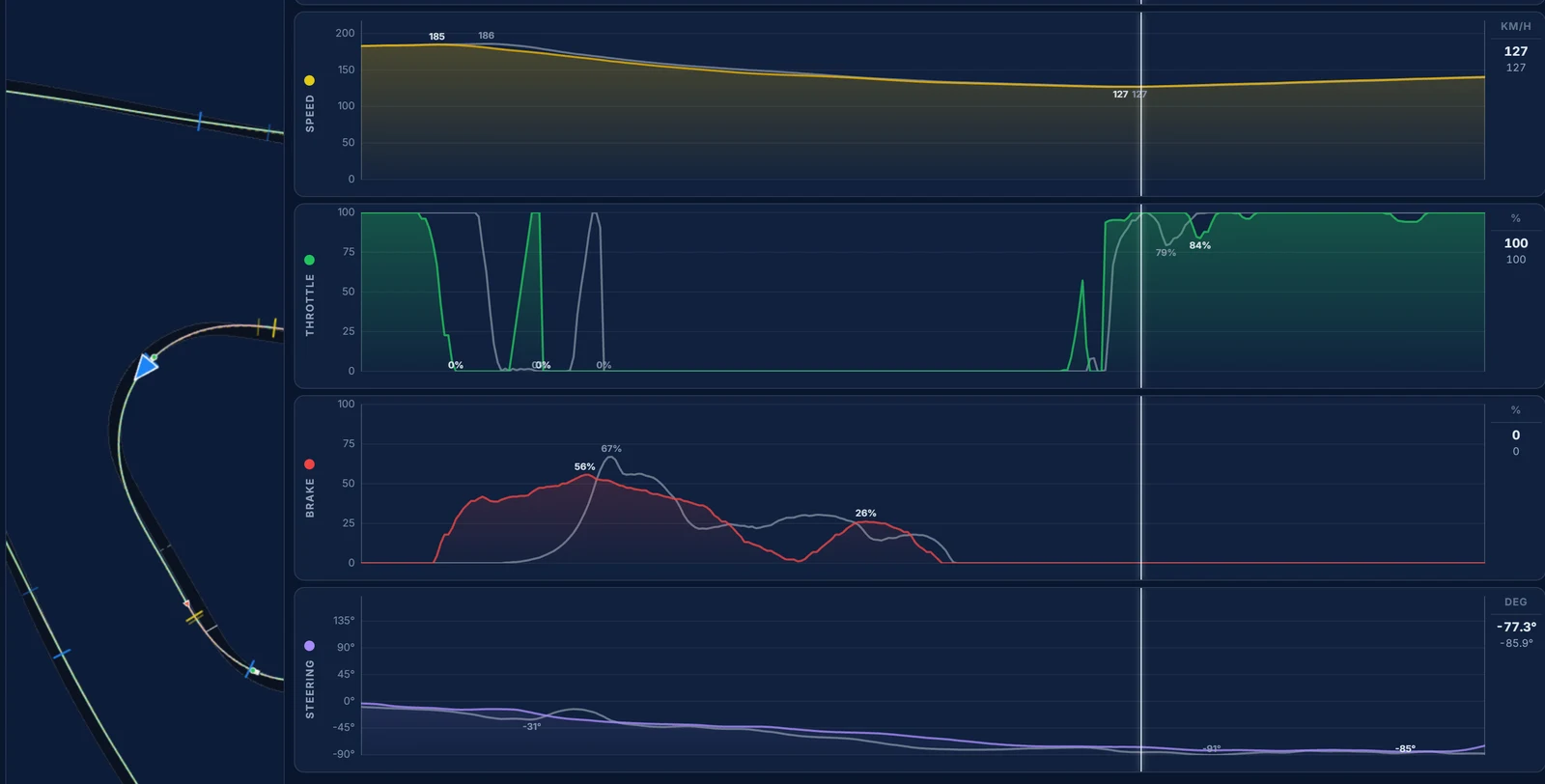
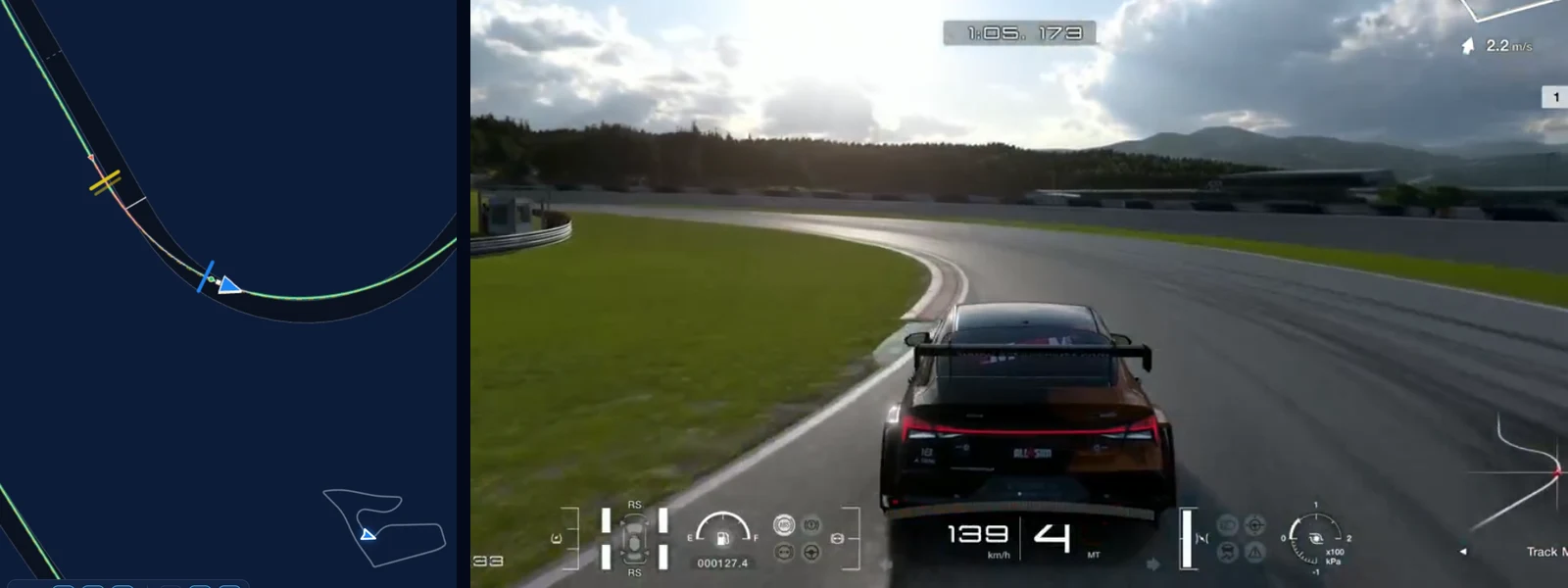
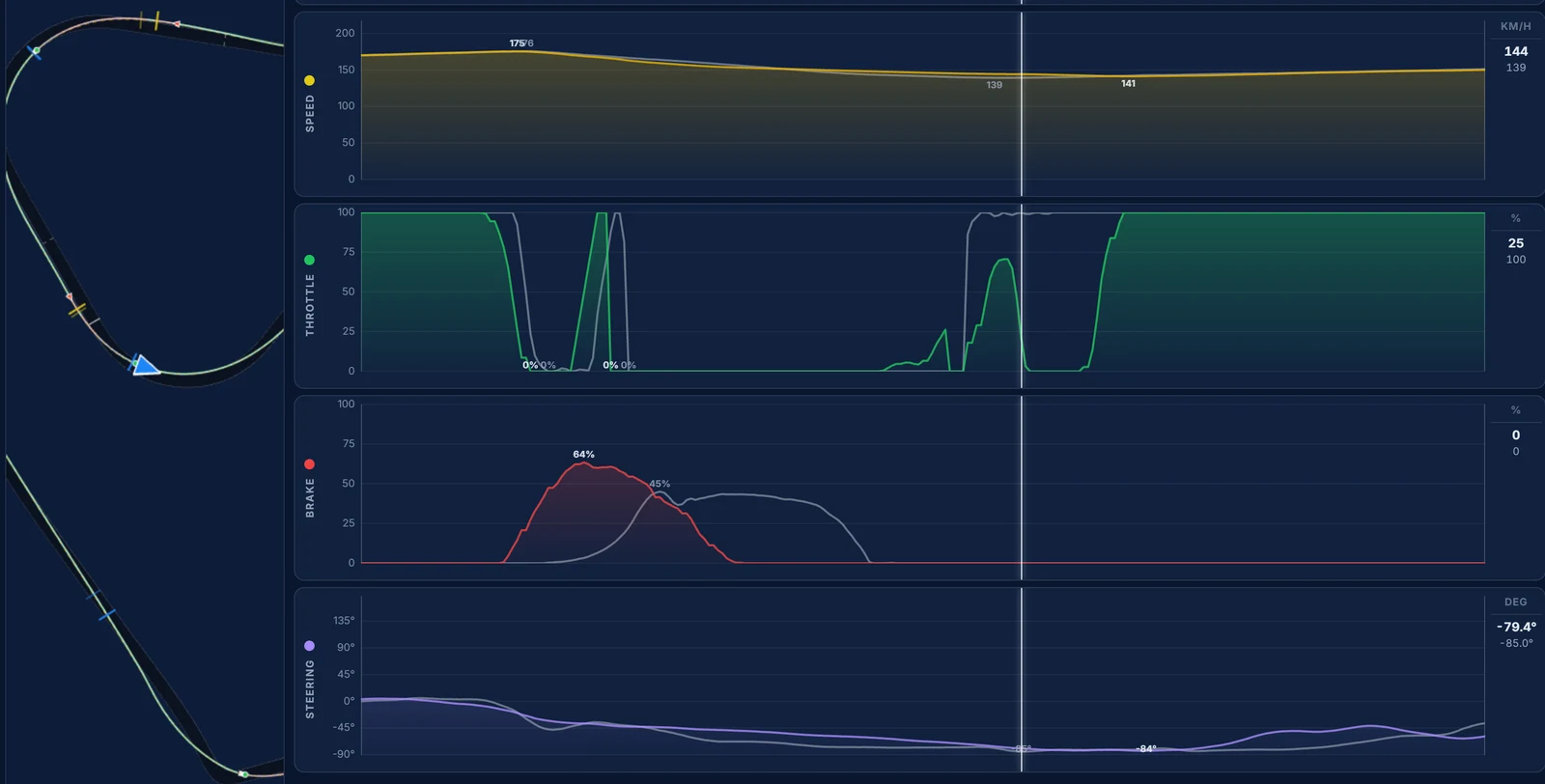
The two left-handers in the middle of the lap cancel each other out. Into the first we brake 11 m before the reference and lose 0.06 s, for the same 127 km/h at the apex. Into the second the brake points are 3 m apart, but we let go of the brake 24 m sooner, at 2,947 m against 2,971 m, and carry 2.2 km/h more through it, 141.3 against 139.1. Over both, we are level.
The last two corners
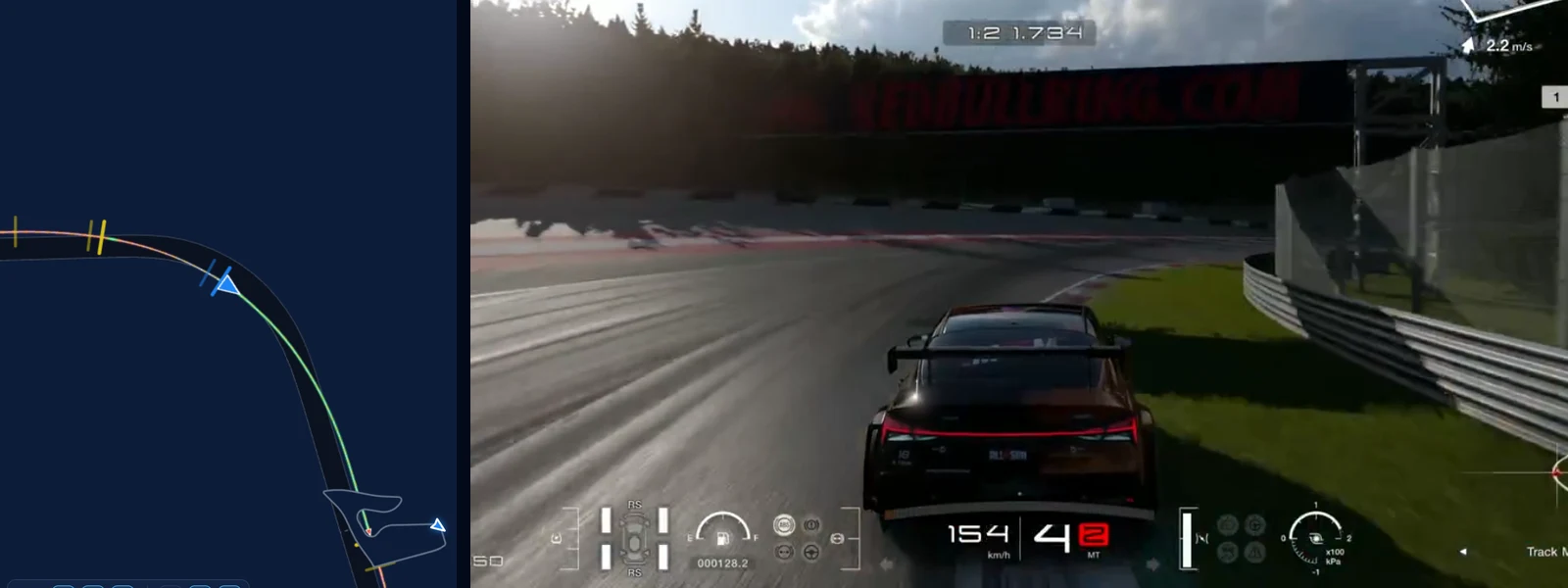
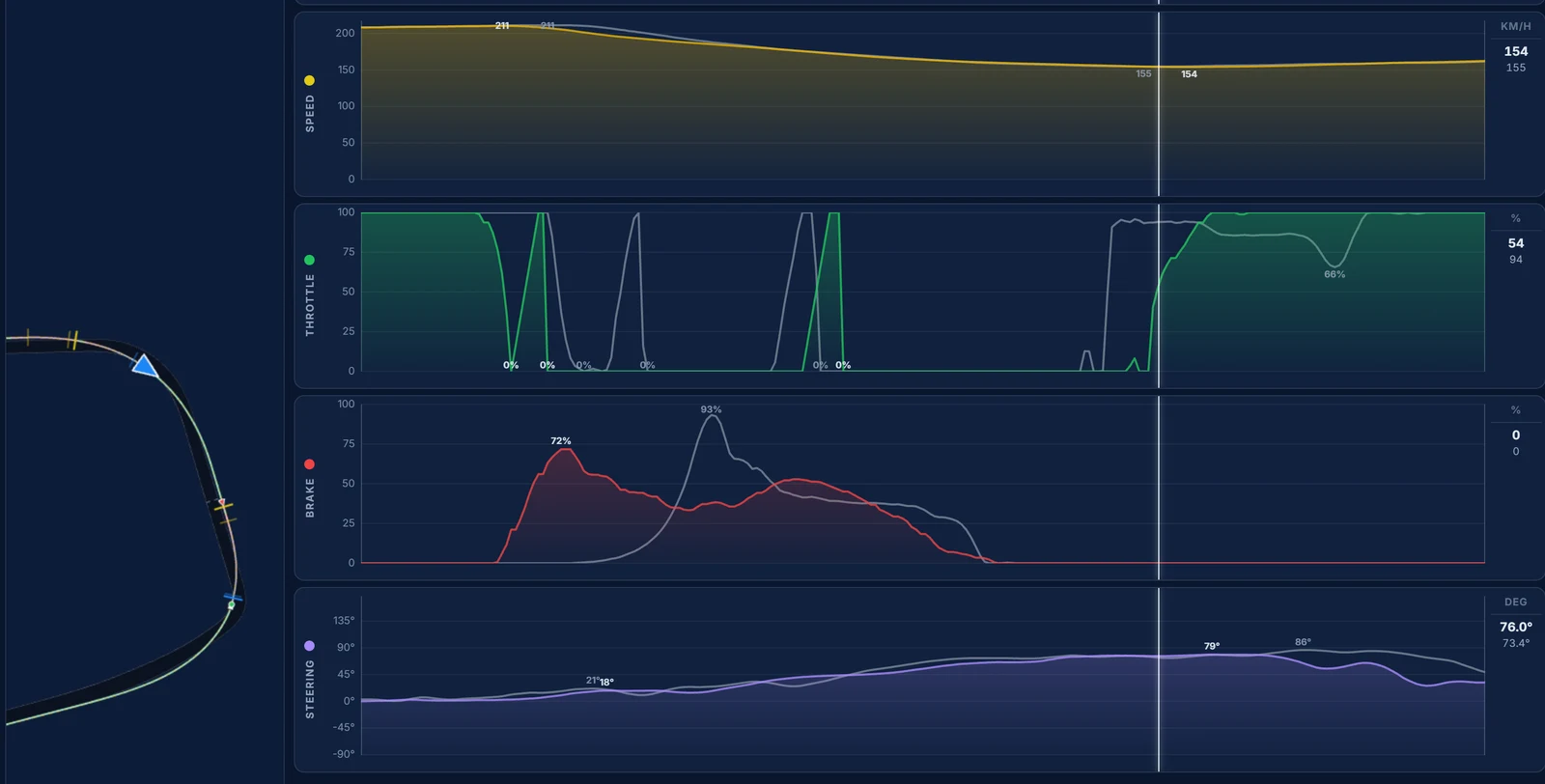
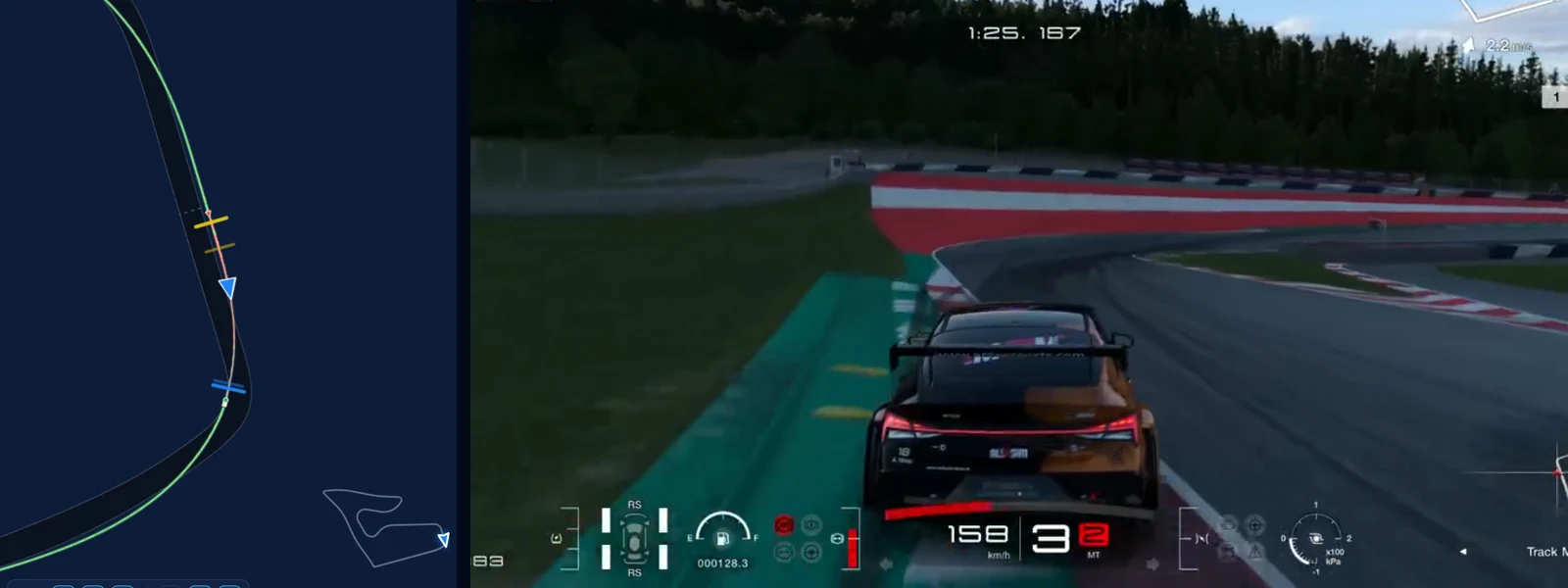
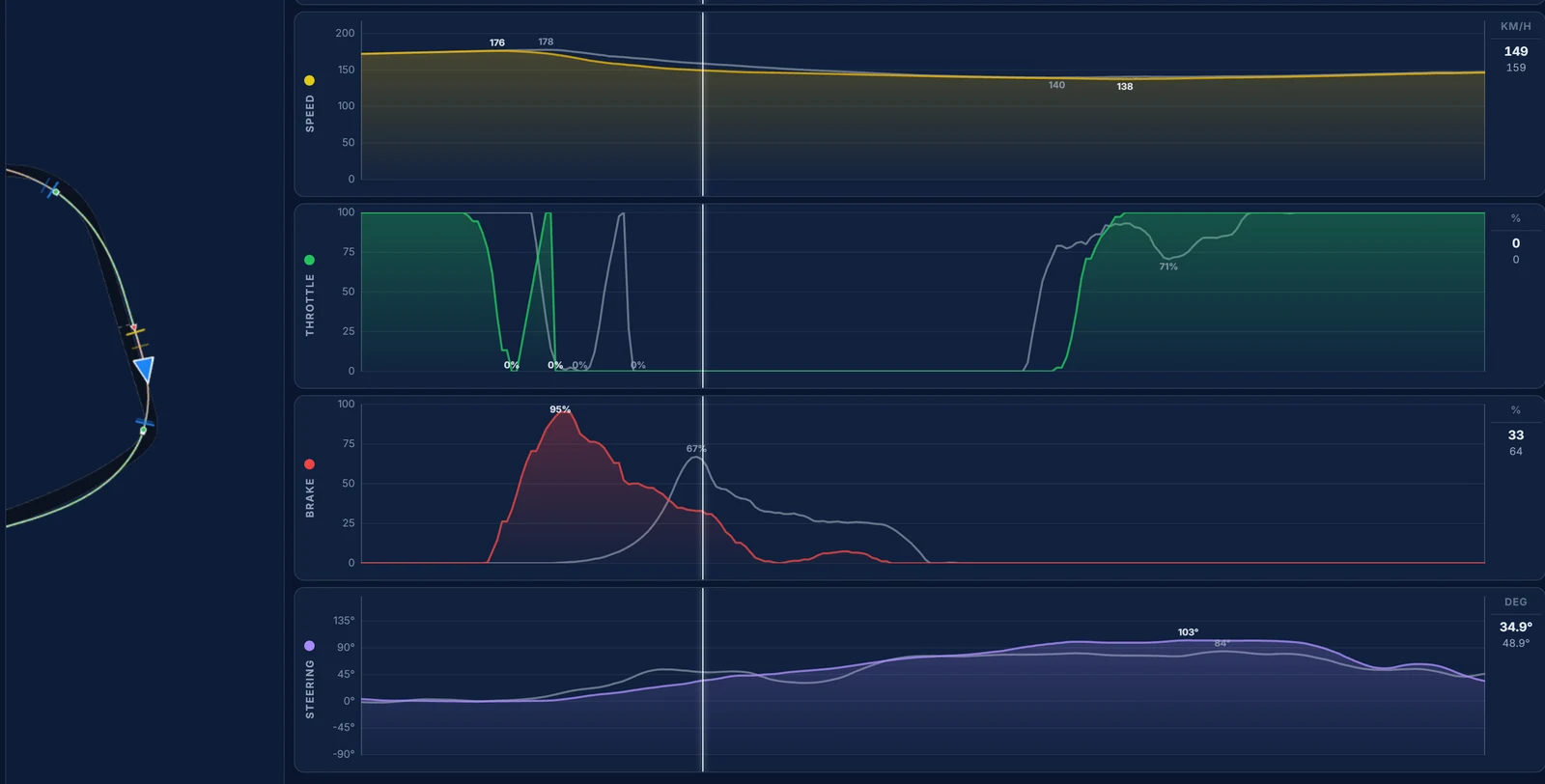
The last two right-handers are the biggest piece, 0.11 s. Into the first we brake 12 m before the reference and give up 0.6 km/h at the apex. The last corner is Turn 4 again: we brake 7 m before the reference, at 3,872 m against 3,879 m, and 30 m later we are 8 km/h slower, 151 against 159 km/h. We reach the apex at 137.6 against 139.5 and get to the line at the same speed, 0.07 s down on that corner alone.
What we take from it
The 0.320 s is almost all braking, and almost none of it is the brake point itself. In Turn 1, Turn 4 and the last corner we start braking 4 to 7 m before the reference and then slow the car faster than it does, so we are 4 to 8 km/h down 30 to 50 metres into the stop. Remus shows the other side: there the early brake buys a faster apex and wins time. The job at the Red Bull Ring is to brake a few metres later and let the car carry more speed into the first part of each stop.
For more on finding this in your own driving, our introduction to Traces explains what Traces does, and our list of reasons you can't go faster covers the habits behind most of it.
Final Thoughts
Most drivers look for the brake point when they look for time. At the Red Bull Ring, the brake points were close; it was the first 30 metres after them that cost us. That only shows when you put the speed traces of two laps on top of each other, metre by metre.
Do it on your own laps
Load your best lap in Traces, pick a faster one from the leaderboard as the reference, and go corner by corner the same way: the Performance page for the line and the video, the Telemetry page for the traces.