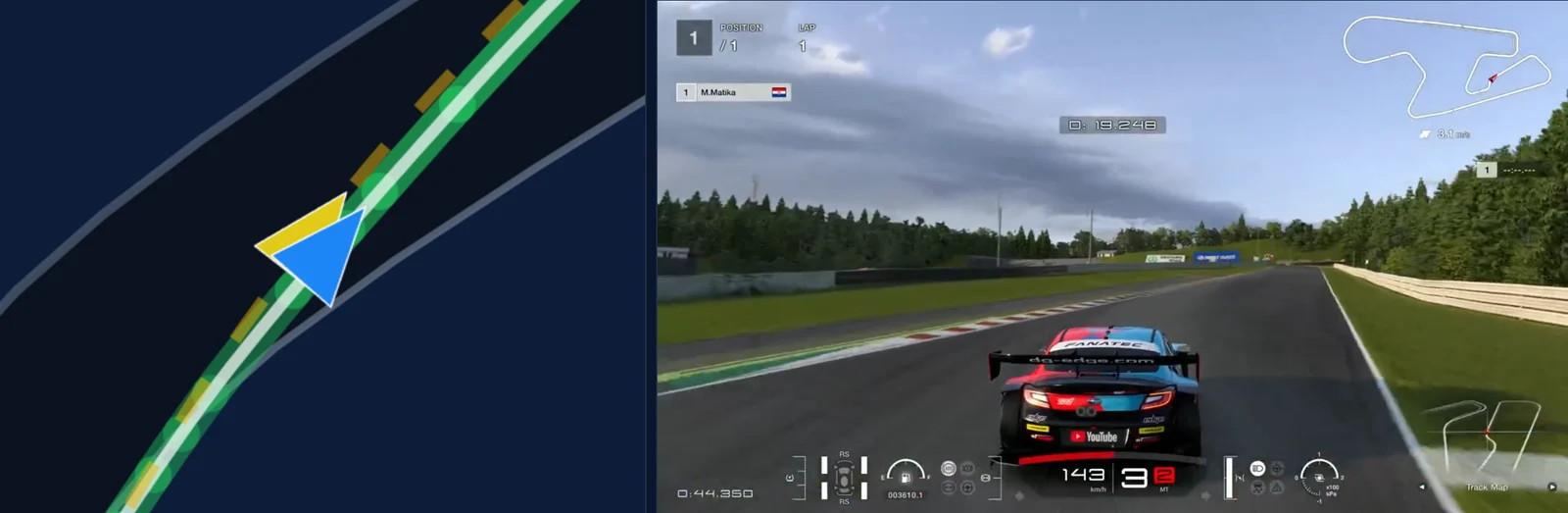
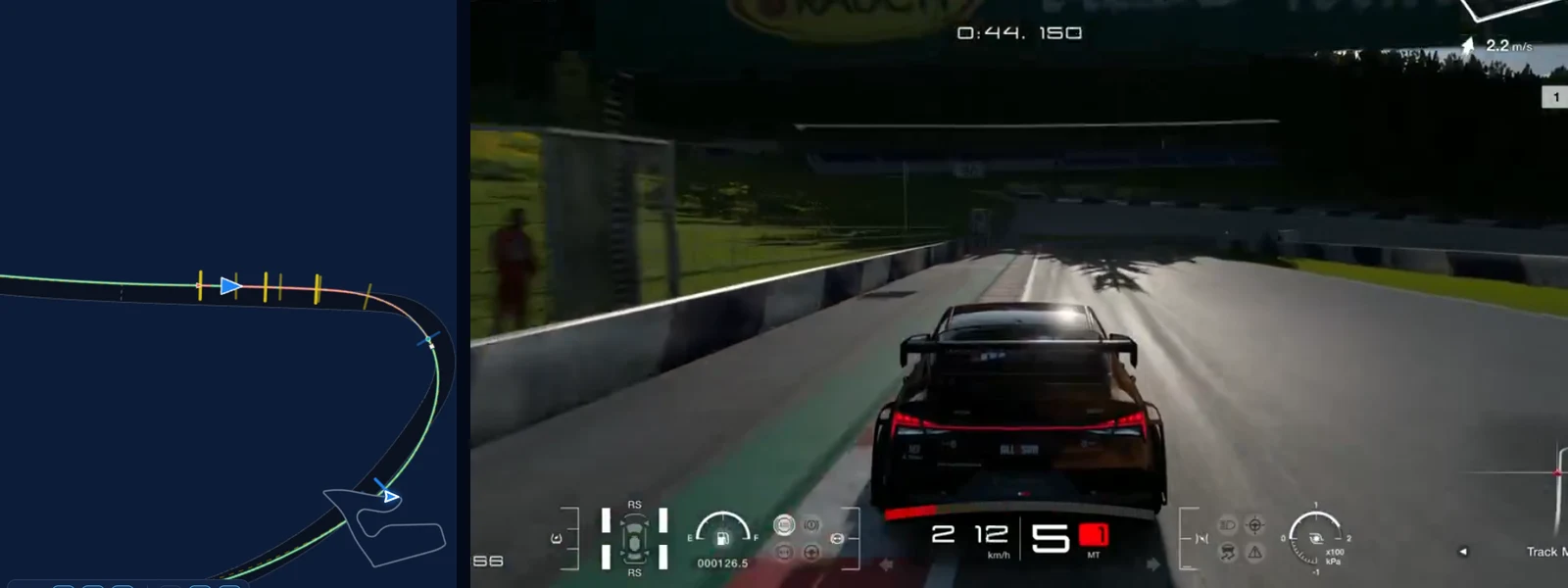
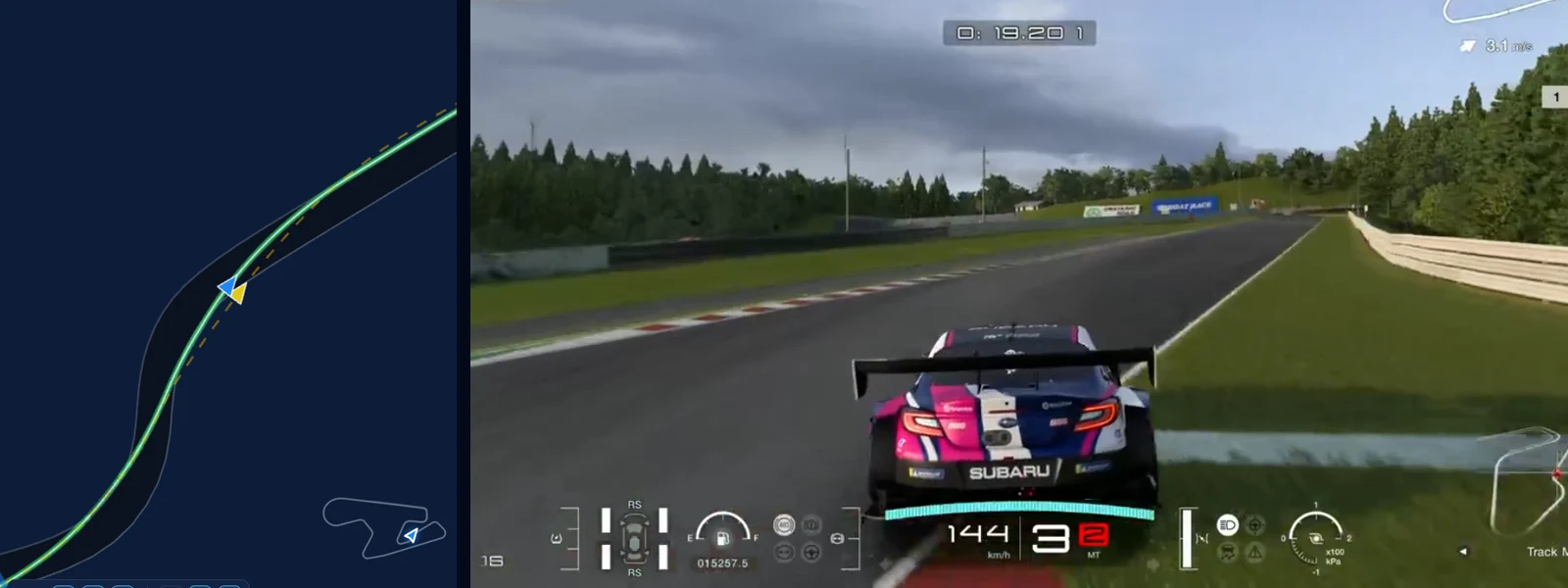
Our best lap of Suzuka in the Honda NSX CONCEPT-GT for Daily Race C was a 1:44.760, and the event reference is a 1:44.384. We put both through Traces and went corner by corner to find the 0.376 s, with both cars side by side at every corner.
This is the Gr.2 race from week 43's Daily Races, and the reference is SFE_Damian's 1:44.384, one of the laps the team set as references for the event. Two thirds of the field picked the NSX, so this is the car most people raced. If you are new to reading laps like this, our telemetry guide explains the method on a lap of SUGO.
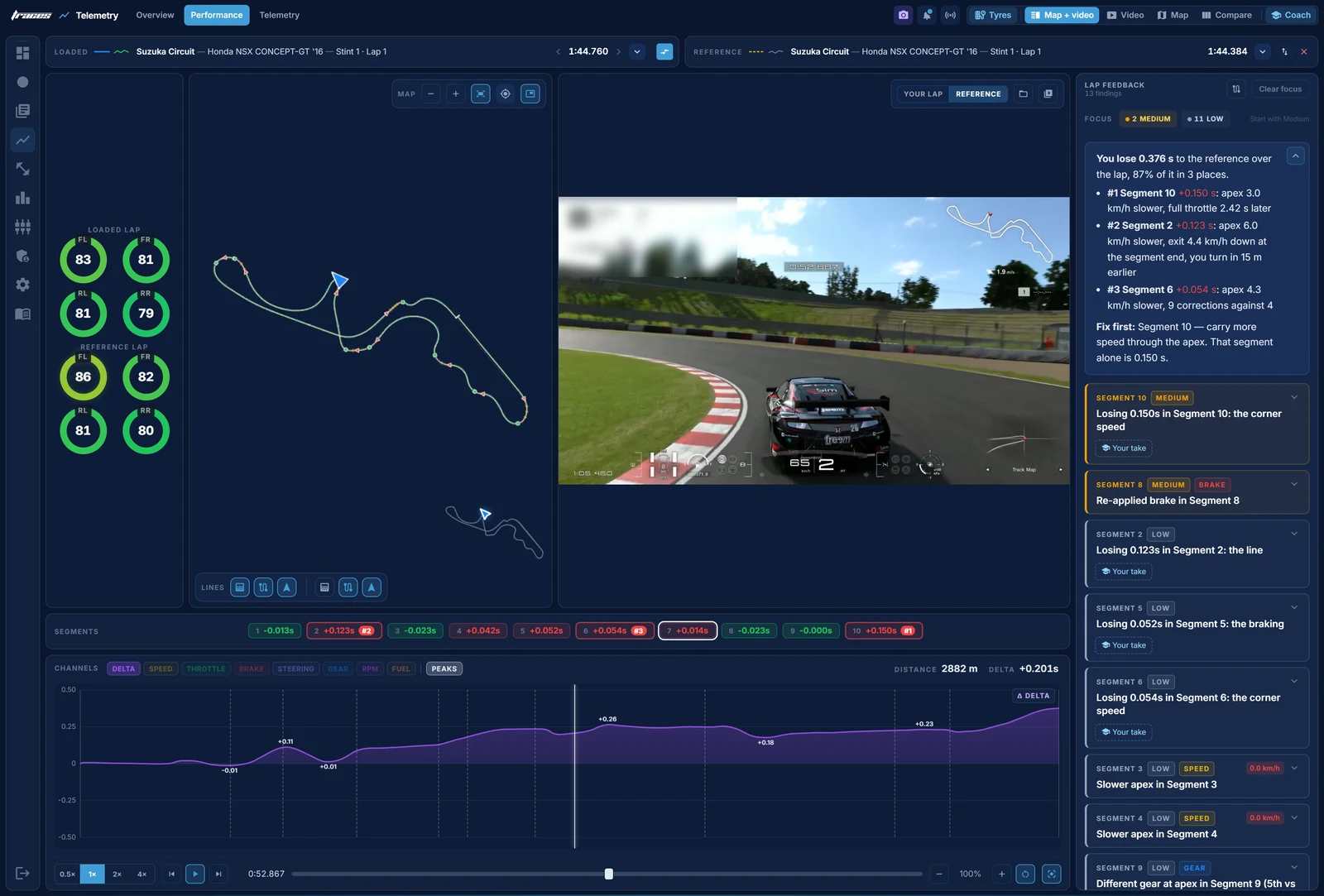
Where the gap builds
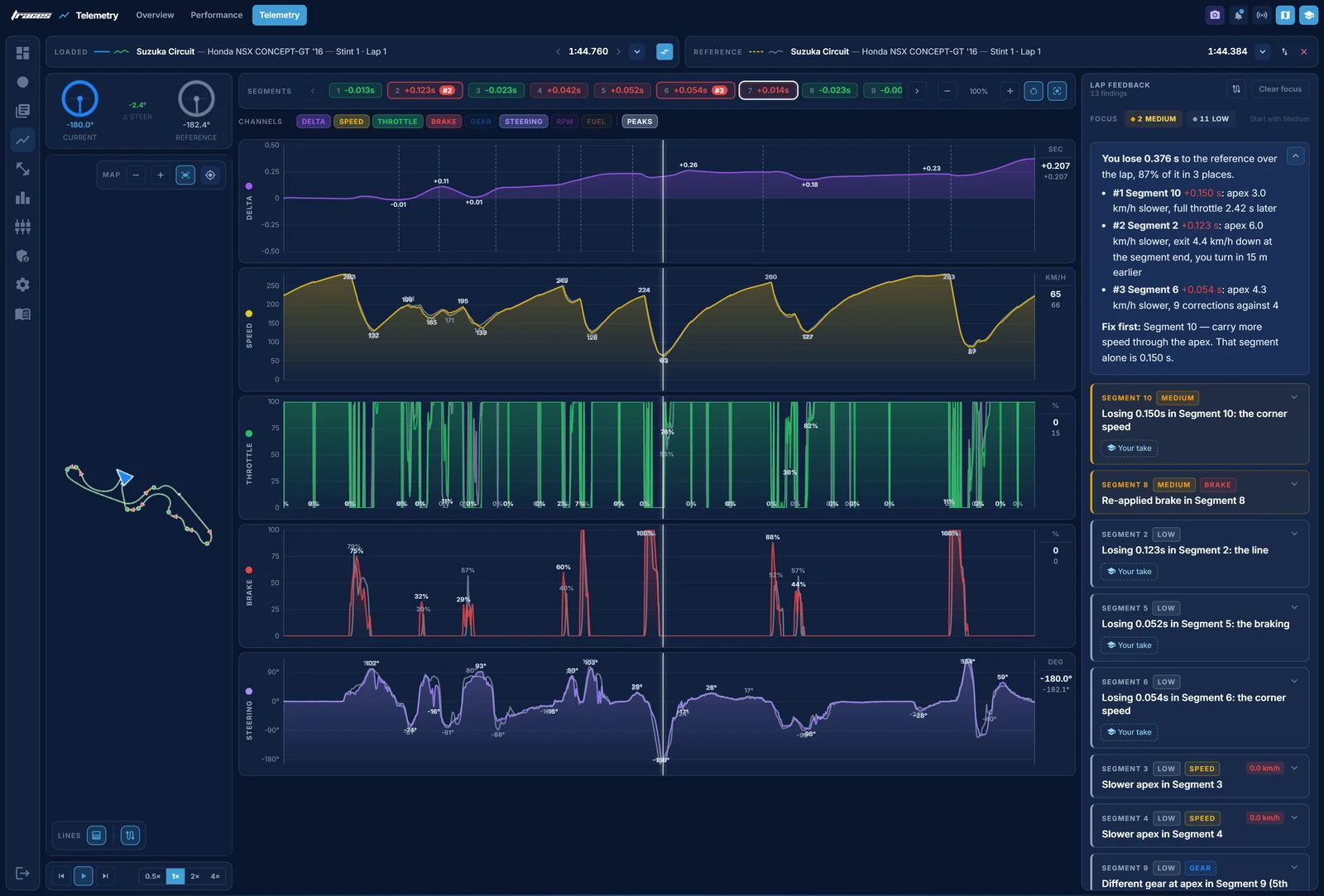
Traces splits Suzuka into ten segments, and its Lap Feedback puts 87% of the gap in three of them: the last segment, from the Casio Triangle to the line, at 0.150 s; the first half of the Esses at 0.123 s; and Degner 2 at 0.054 s. Turns 1 and 2, the second half of the Esses and Spoon go the other way, and we gain time there.
Both laps have their video, so in each corner below the first picture is the Performance page's Compare view: our car on the left, the reference on the right, at the same metre of track. The second is the Telemetry page zoomed to the corner, with its map on the left. The reference was recorded from a replay, so its brake points are taken where its brake lights come on, as Traces does since 2.0.2.
Turns 1 and 2
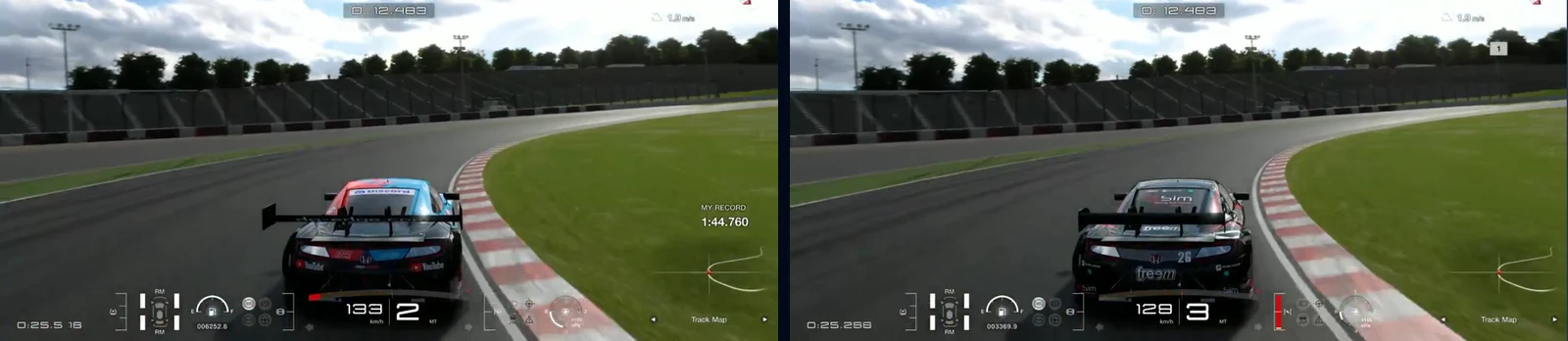
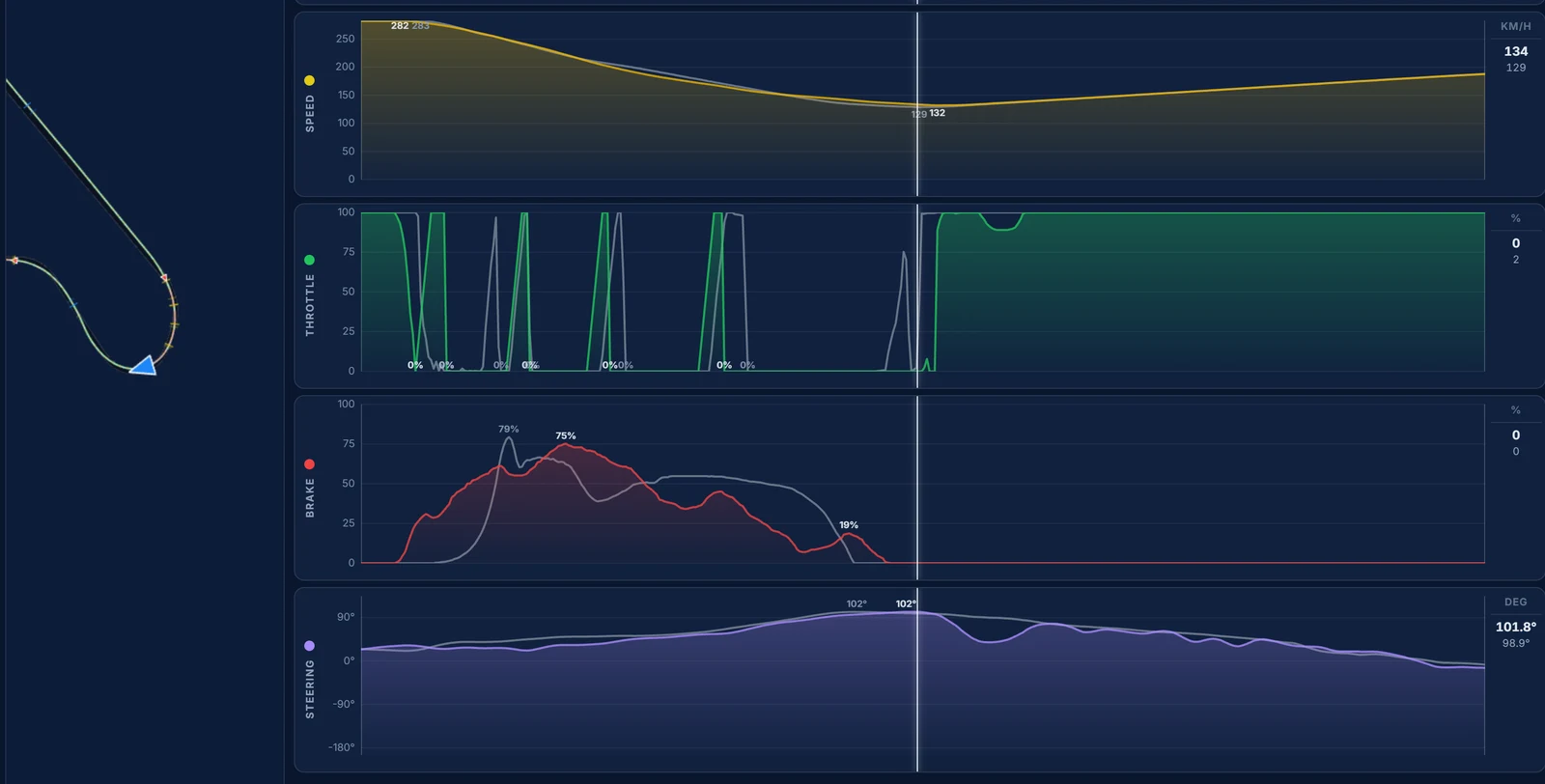
We start the lap by gaining time. From 282 km/h we brake 12 m earlier than the reference, at 658 m against 670 m, but carry 3.3 km/h more through Turn 2, 132.1 against 128.8 km/h, and leave at the same speed. Turns 1 and 2 are worth 0.013 s to us. An early brake is not always a mistake: here it buys a faster, tidier Turn 2.
The Esses, first half
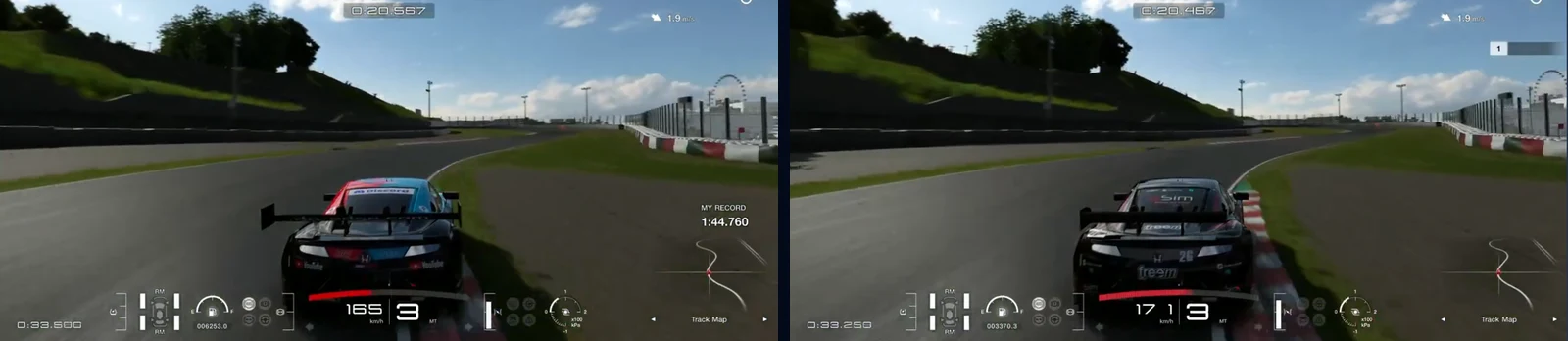
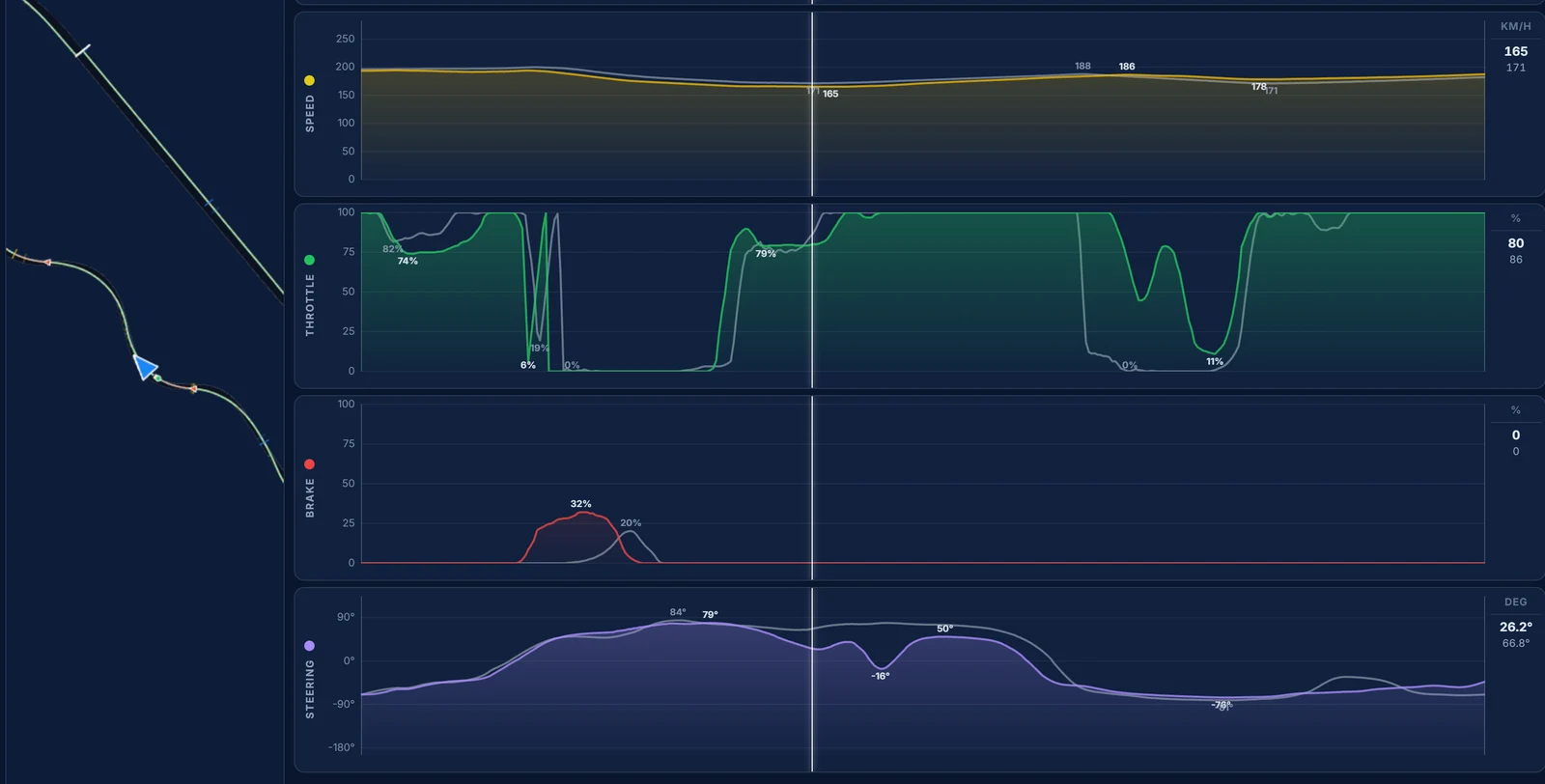
This is where the lap starts to go. Into the first right-hander we brake, up to 31%, from 193 km/h; the reference only brushes the pedal and lifts. We are through the slowest point at 165.3 km/h against its 171.2. Our line then runs up to 3 m from the reference's on the way to the left-hander that follows. This first half of the Esses is Traces' Segment 2, and at 0.123 s it is the second-biggest loss on the lap.
The Esses, second half
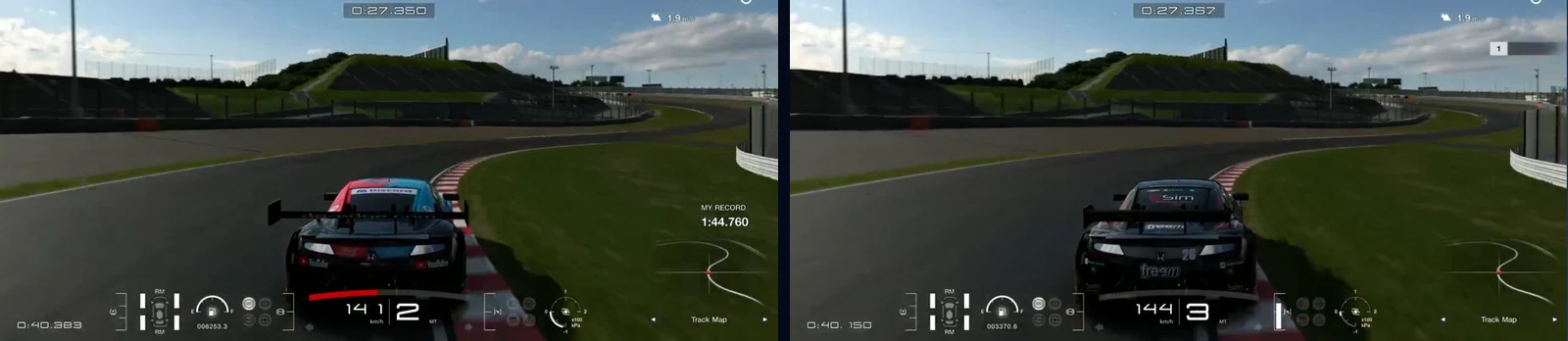
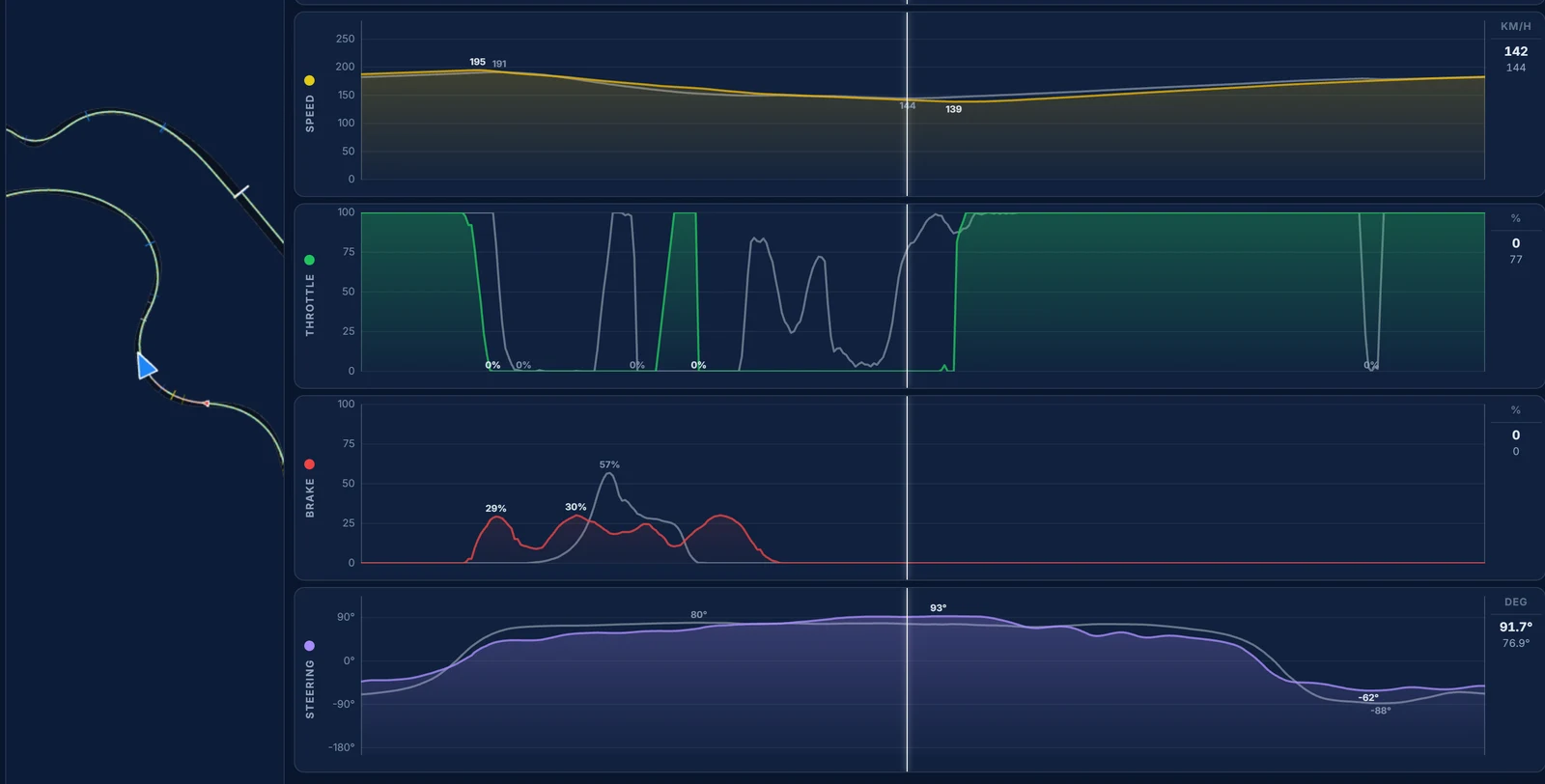
The second half starts well. On our different line we carry 7 km/h more through the left-hander, 178.3 against 171.0, and win 0.06 s back. Then comes the last right-hander. The brake points are 9 m apart, 1,456 m for us and 1,465 m for the reference, but we stay on the brake 18 m longer and reach the apex 6 km/h slower, 138.5 against 144.5. Up the hill to Dunlop we get back to the same speed, but that corner costs 0.05 s, and the second half of the Esses ends up only 0.02 s in our favour.
Dunlop
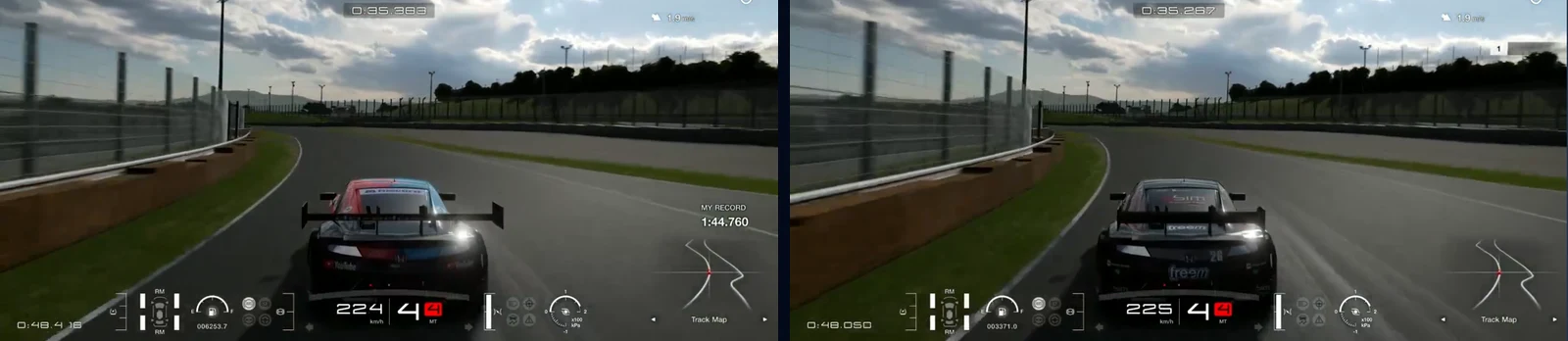
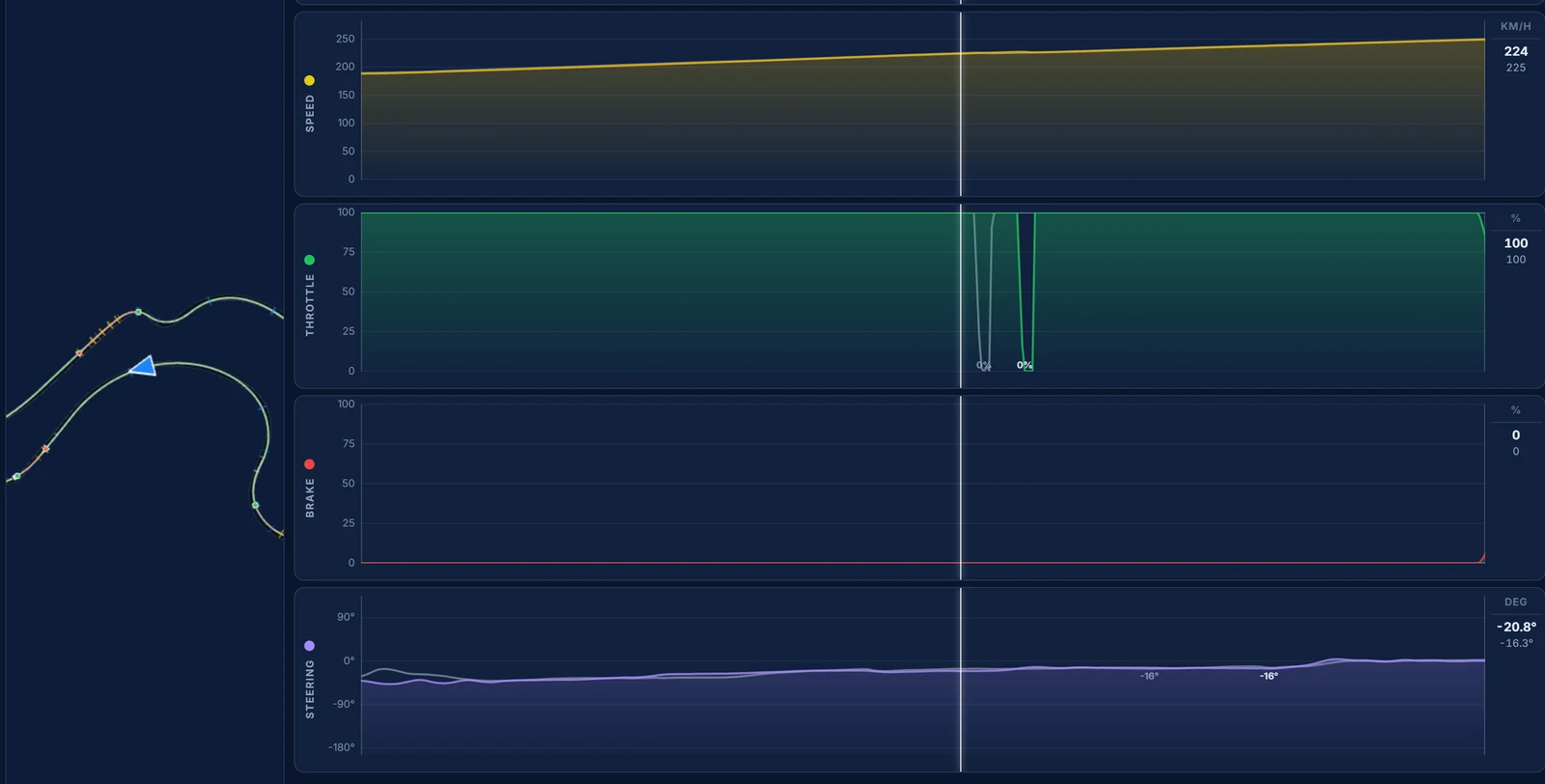
Flat out and uphill, Dunlop is level: the lines are within a metre and the speeds within a kilometre an hour. Over its half a kilometre it still costs 0.02 s, a few thousandths at a time.
Degner 1 and 2
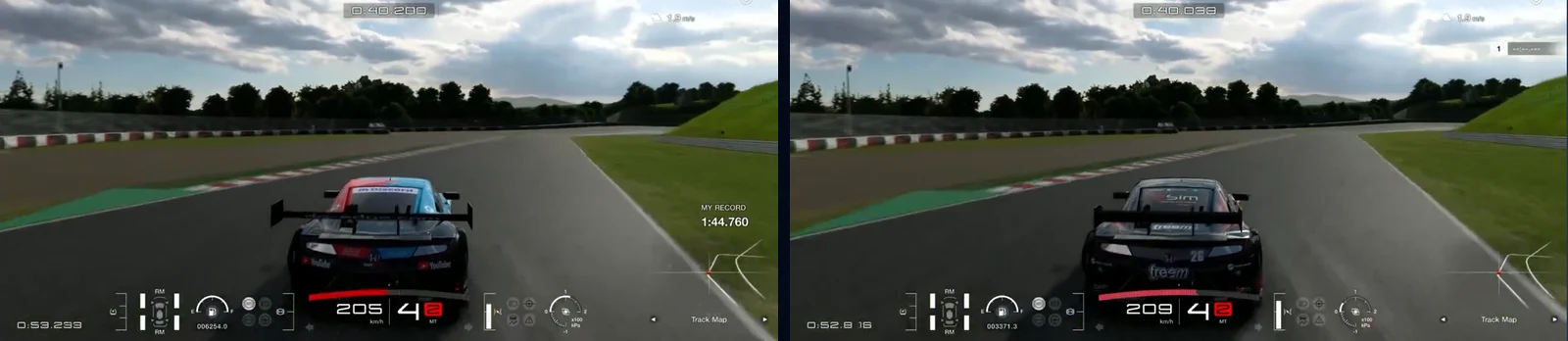
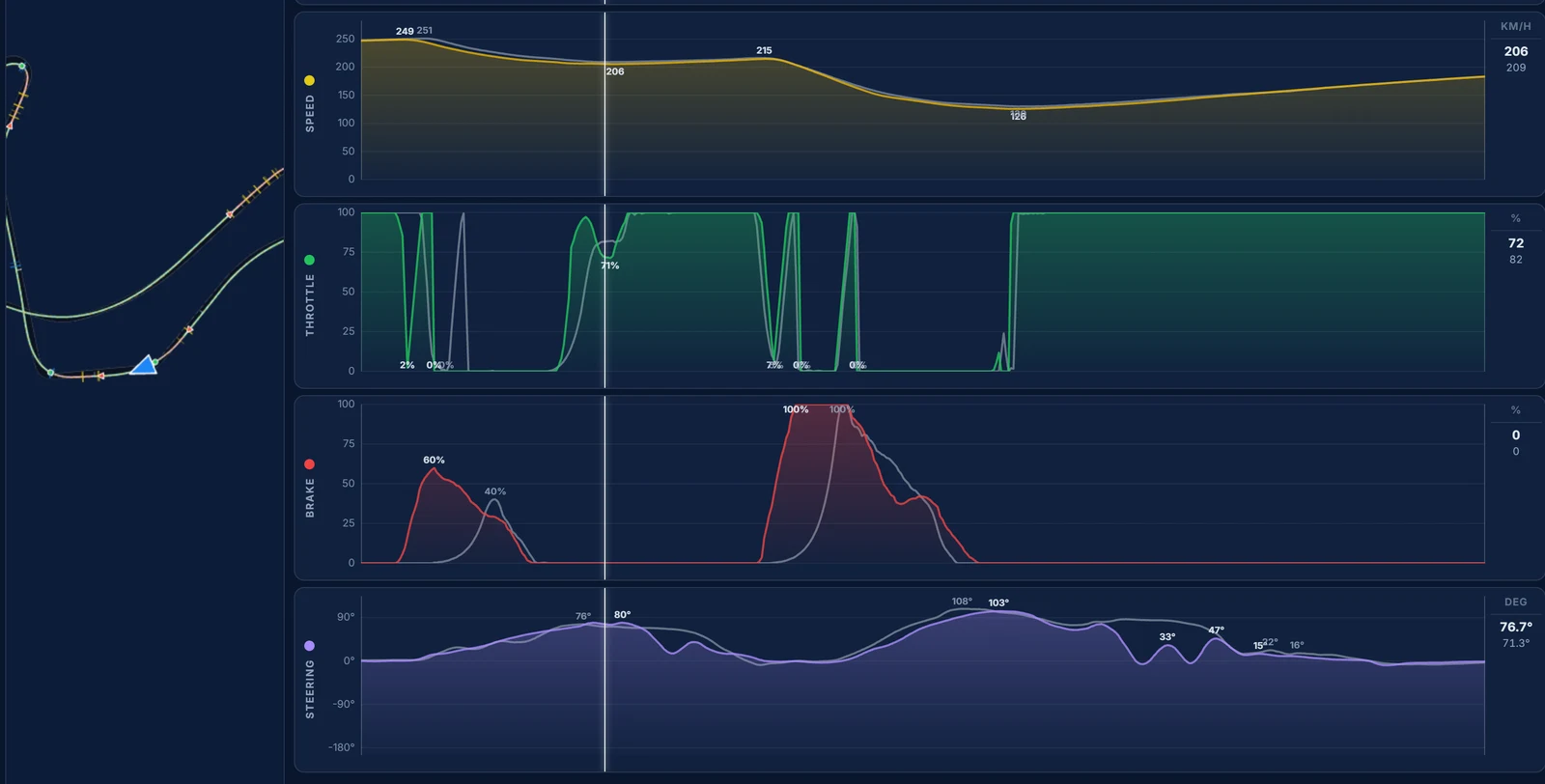
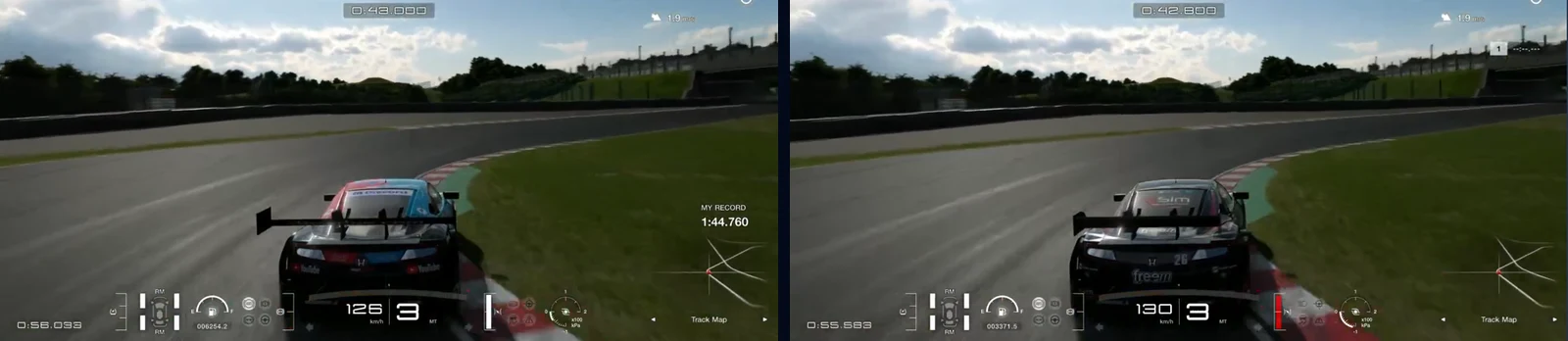
Degner costs 0.11 s, split almost evenly between the two corners. Into Degner 1 we brake 10 m before the reference, at 2,198 m against 2,208 m, and carry 3.5 km/h less through it, 205.6 against 209.1 in fourth gear. Degner 2 is another 4.2 km/h down at the apex, 125.8 against 130.0, and the Coach counts nine steering corrections there against the reference's four. We are not committing to Degner 1, and Degner 2 is spent tidying up.
The Hairpin
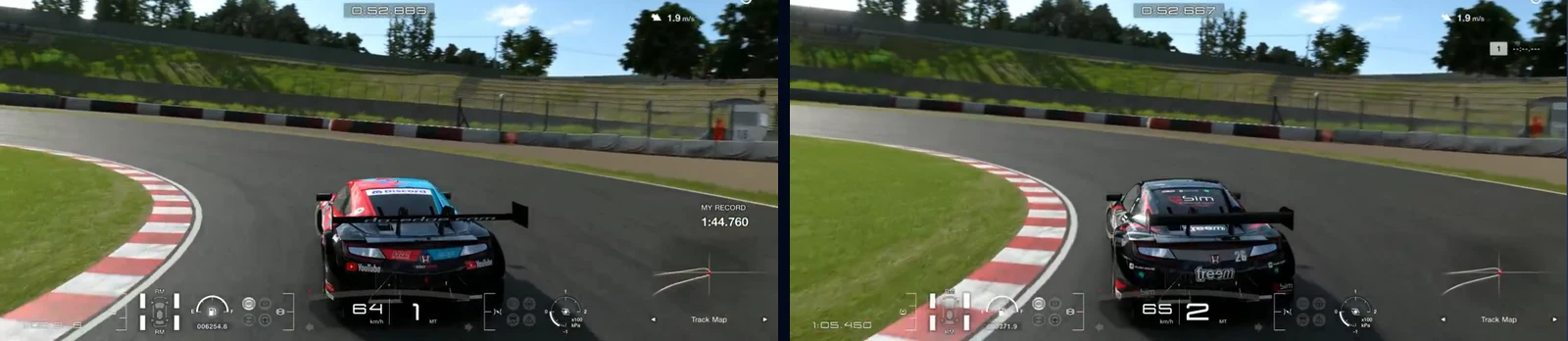
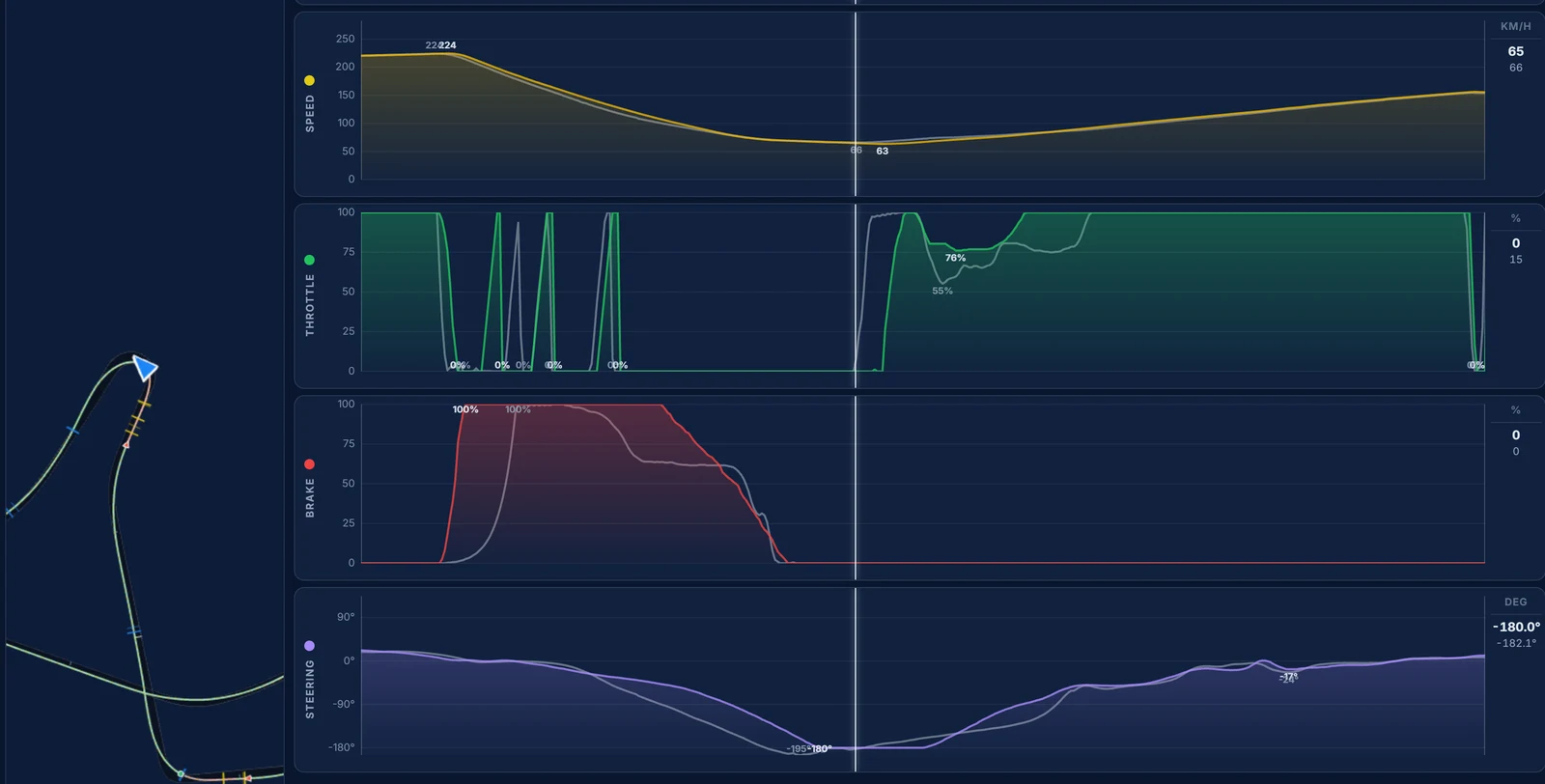
The brake points into the Hairpin are within 3 m, 2,793 m and 2,790 m, and we release at the same place. Our line is up to 1.7 m wider at the apex and we are 2.4 km/h slower there, 63.3 against 65.7, which costs 0.04 s. We take half of it back on the way out: on the run to 200R we are on the power a little better and gain 0.02 s.
200R and Spoon
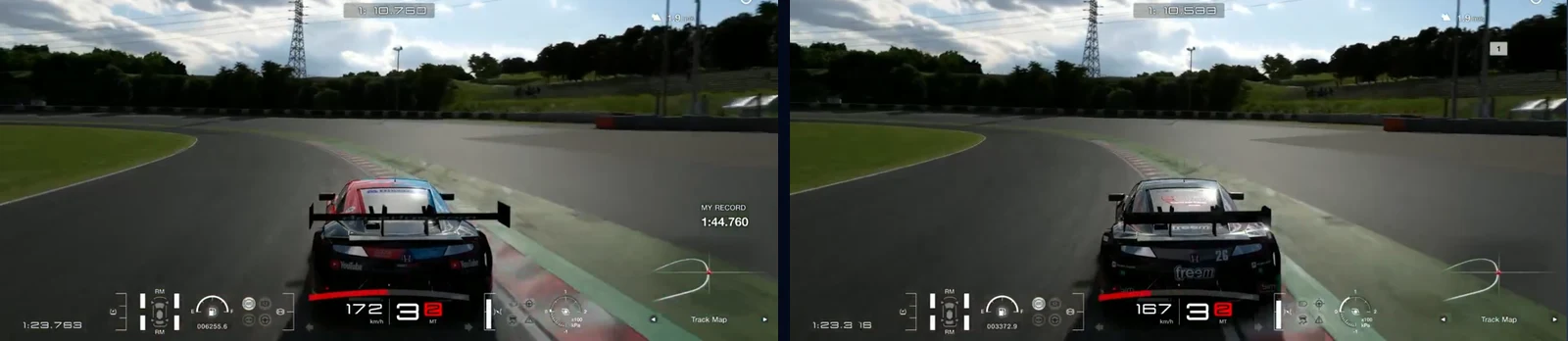
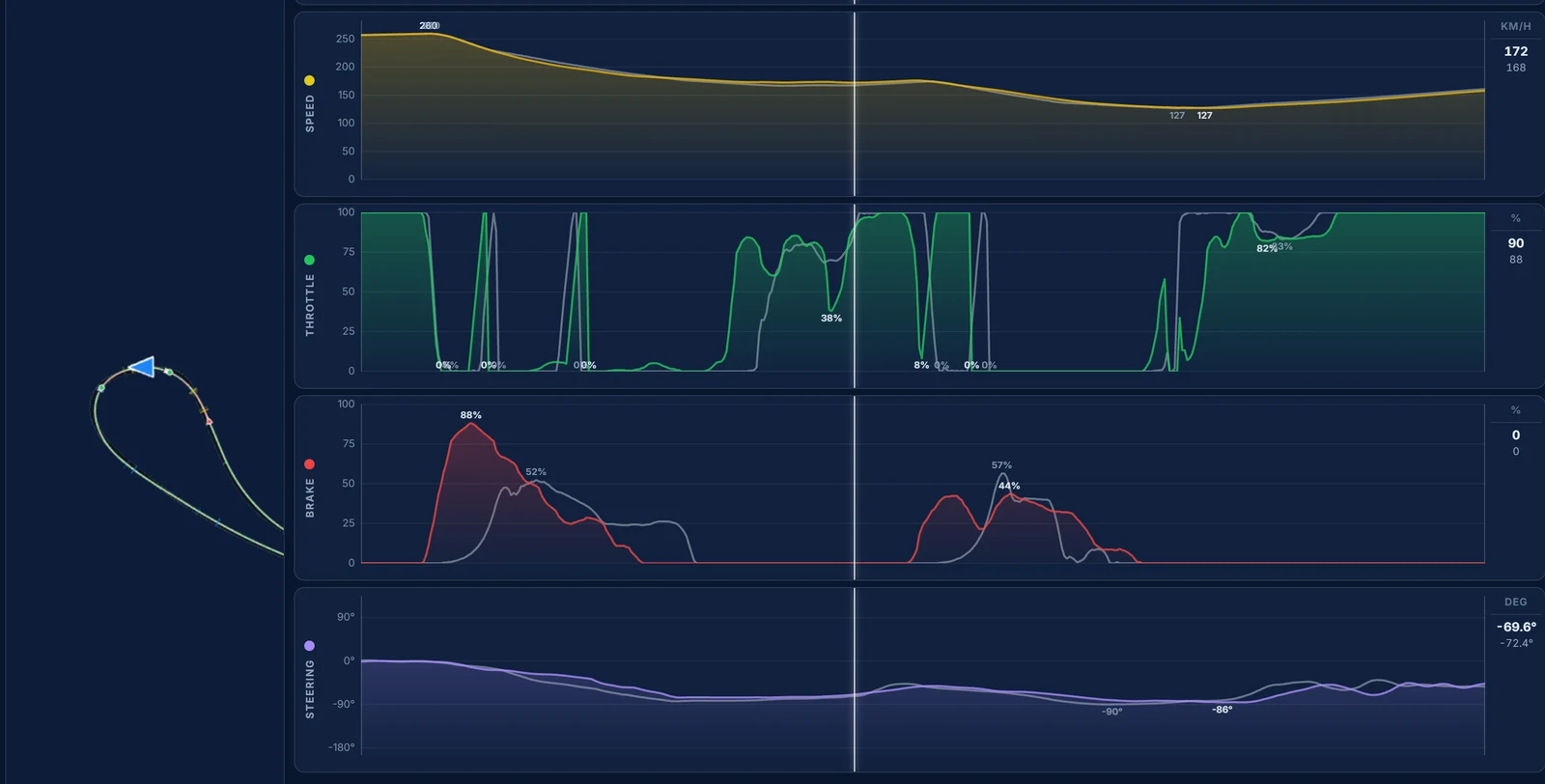
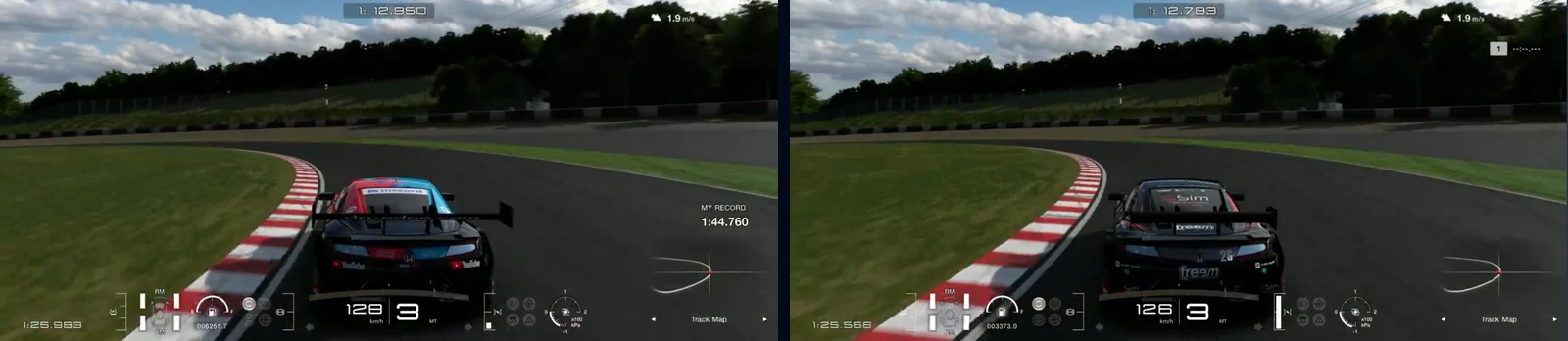
Spoon is our best corner. The brake points are 2 m apart, but we let go of the brake 18 m sooner than the reference, at 3,759 m against 3,777 m, and carry 5.6 km/h more through the first apex, 172.5 against 166.9. The second apex is the same speed for both, and Spoon gives us 0.04 s. It is the opposite of the Esses: an early release and speed carried into the corner, rather than a corner driven on the brake.
130R
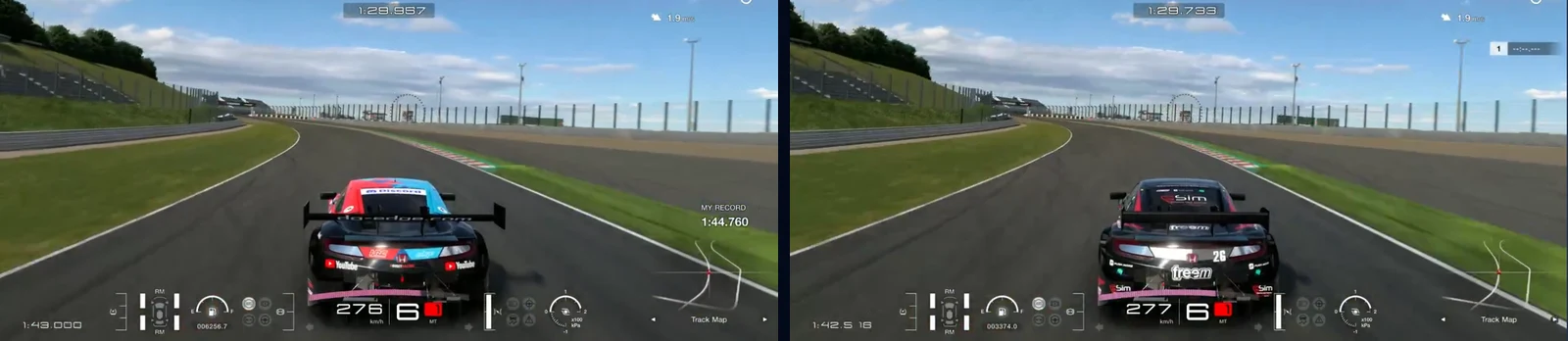
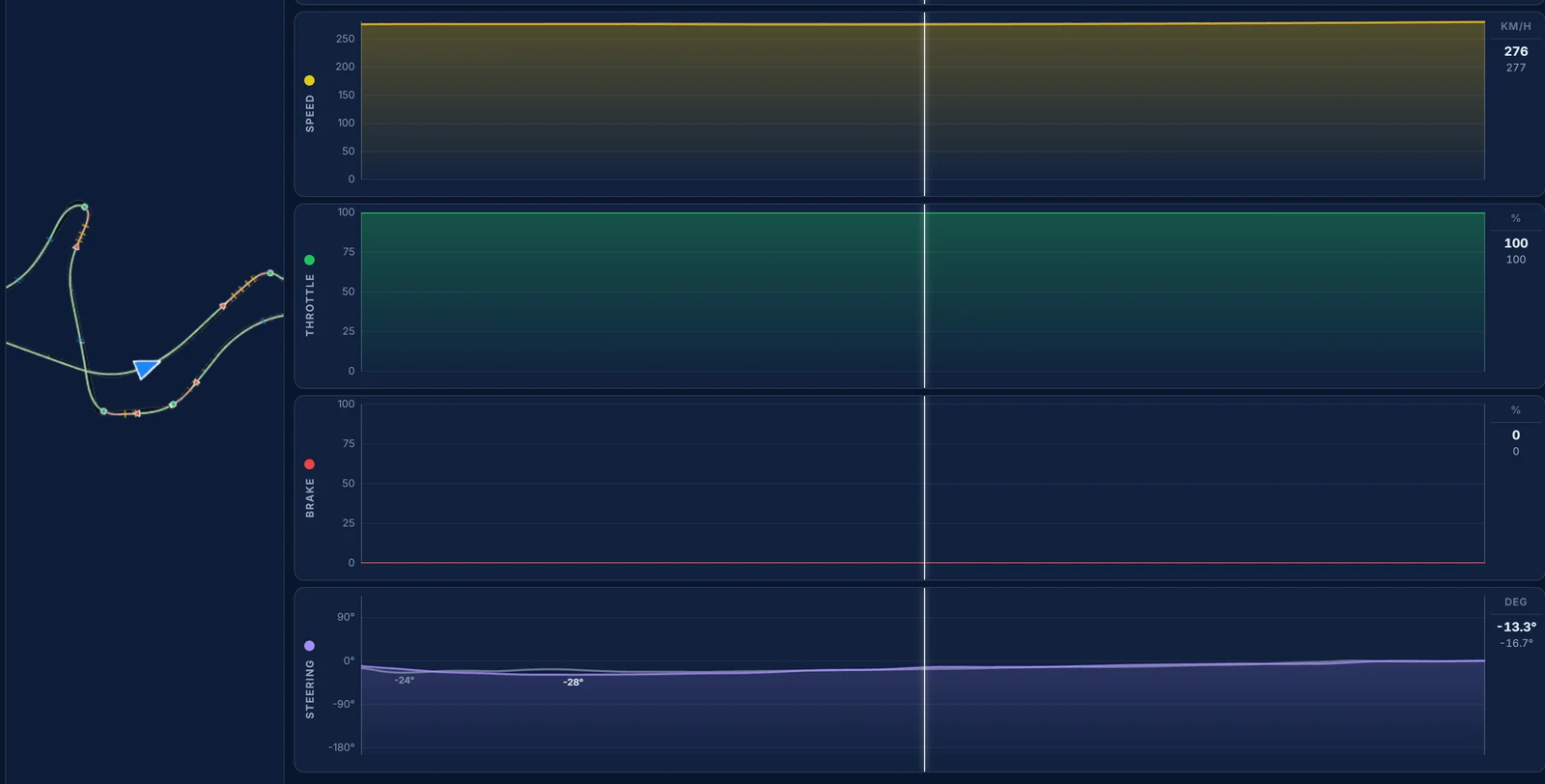
Flat out at 277 km/h for both of us, with the lines within 1.5 m. The 0.03 s between Spoon and the Casio Triangle is a kilometre an hour of top speed lost along the back straight, carried from the exit of Spoon.
The Casio Triangle and the final curve
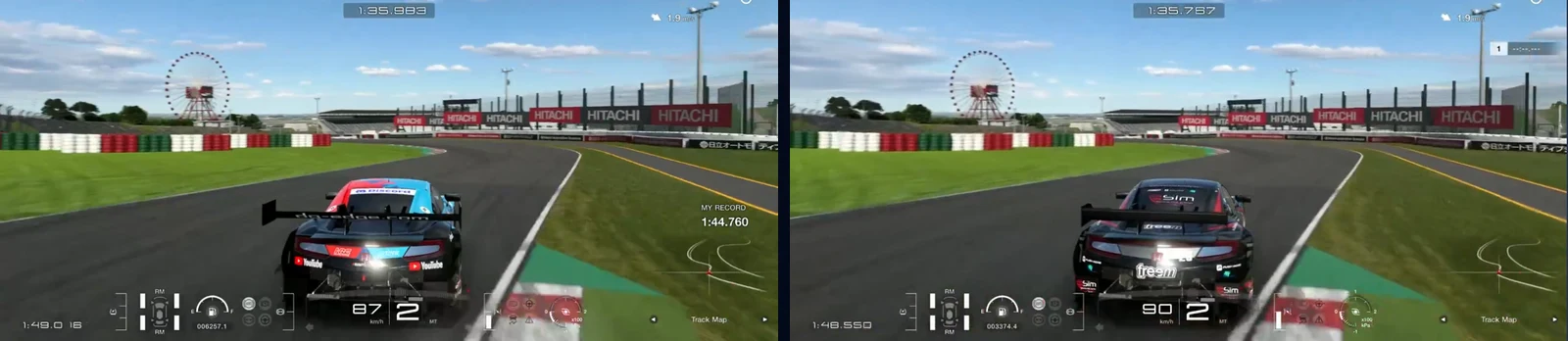
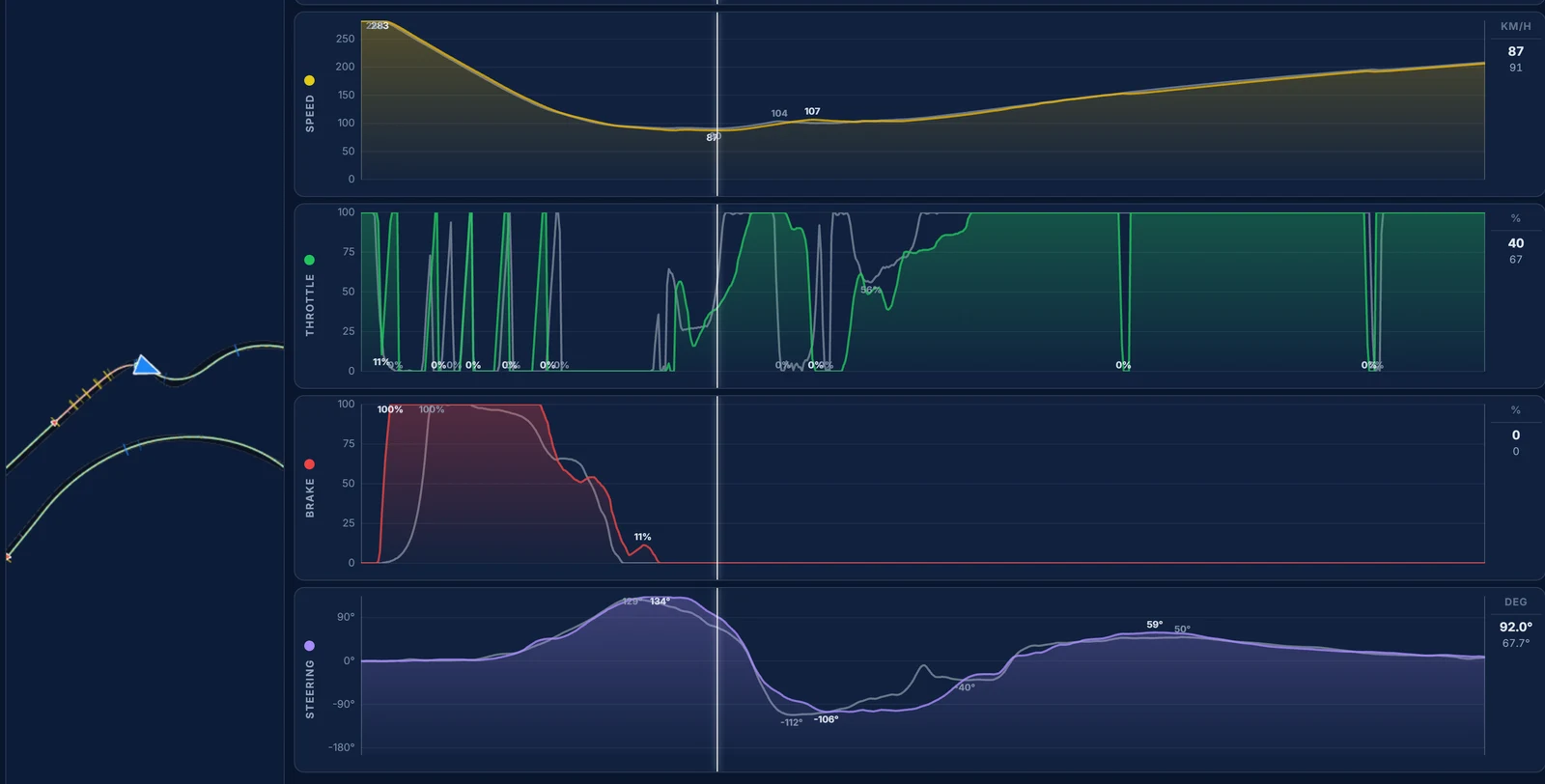
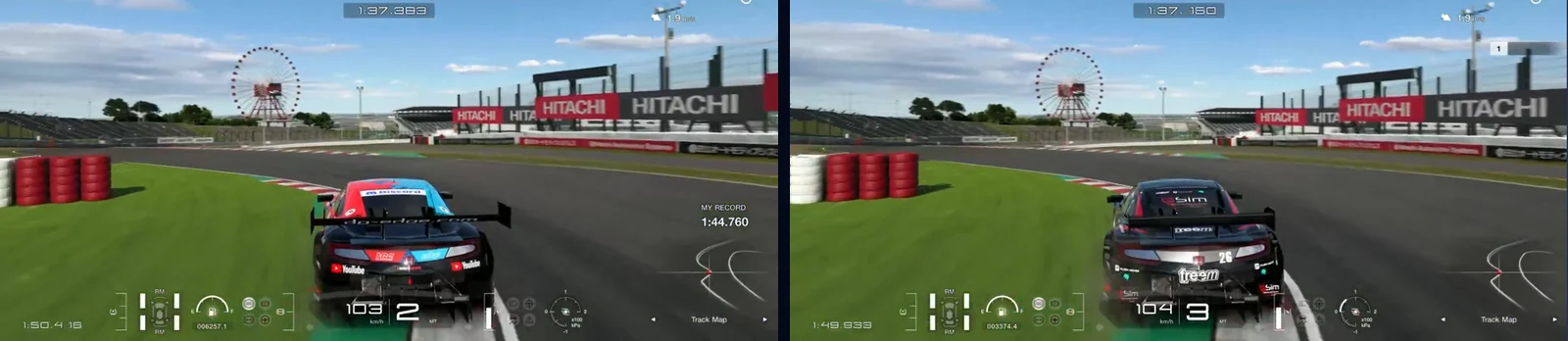
The brake points are 4 m apart, and ours is the later one: 5,214 m against 5,210 m, from 283 km/h. We are 3 km/h slower at the apex, 87.3 against 90.4, which costs 0.02 s. The real loss comes after it. Just past the second part of the chicane we lift, to nothing at first, for about 25 metres, and we stay in second gear until 5,481 m. The reference is in third at 5,380 m and flat out from 5,407 m. By the line, that exit has cost 0.12 s.
The biggest loss on our Suzuka lap is the exit of the Casio Triangle, where we stay in second gear 100 metres longer than the reference. The Lap Feedback puts it first for the same reason: full throttle 2.42 s later than the reference.
What we take from it
Three places hold the 0.376 s, and none of them is a brake point. In the Esses we brake where the reference lifts and hold the brake too long into the last right-hander. In Degner we do not commit to the first corner and then correct through the second. And at the Casio Triangle, the slowest corner on the lap, we lift on the exit and stay a gear too low. Spoon and Turns 1 and 2 show we can already carry the speed; the job is to do it in the Esses and Degner too.
For more on finding this in your own driving, our introduction to Traces explains what Traces does, and our list of reasons you can't go faster covers the habits behind most of it.
Final Thoughts
Seeing both cars side by side at the same metre makes the numbers easy to believe: the reference in third gear while we are still in second, its car calm through Degner while ours is being corrected. If you want to do the same with your own laps and a faster driver's replay, you can download Traces for Windows and macOS.
Do it on your own laps
Load your best lap in Traces, pick a faster one from the leaderboard as the reference, and go corner by corner the same way: the Performance page for the line and the video, the Telemetry page for the traces.